
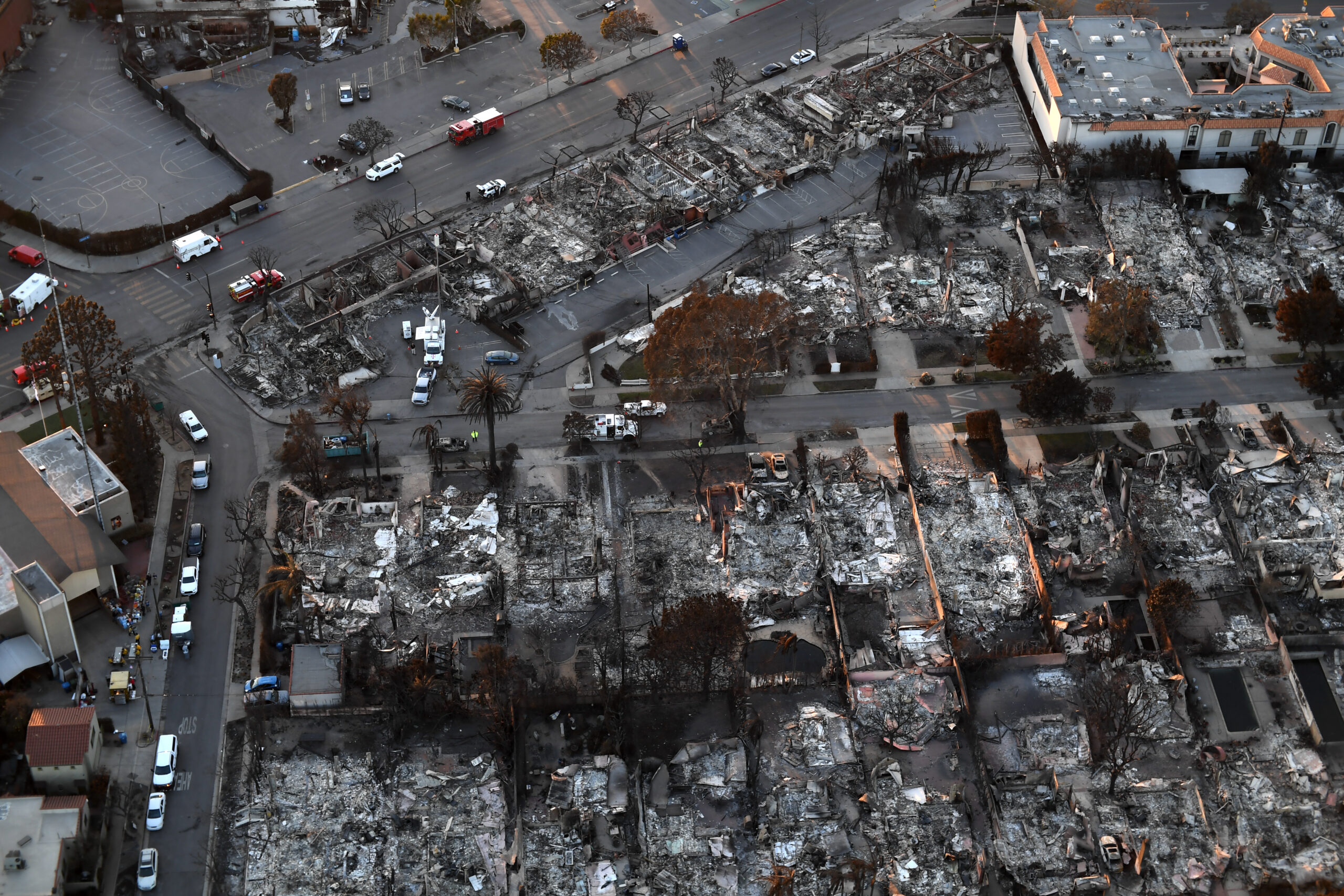
Since January 7th, 2025, the LA fires have gripped social media, news outlets, and conversations. Despite the relentless efforts of thousands of firefighters from California and further afield, the blaze has claimed the lives of at least 27 people, destroyed over 10,000 homes, and forced more than 90,000 people to evacuate as of January 20th. And these numbers are expected to rise. However, one question is at the forefront: What is the cause of this crisis?
LA is no stranger to wildfires, but these are the deadliest in California’s history. The fires are a product of circumstance, a mix of factors combined in a devasting way, as with many natural disasters: the Santa Ana winds (powerful, dry winds that sweep across California every year), which fan wildfires, limit air fire-fighting and create perfect fire conditions are abnormally strong; new neighbourhoods have been built upon the at-risk landscape; and whatever caused the initial spark (arson, power-lines, human mistake?). However, one over-arching cause is climate change.
According to climate scientists, at least. Donald Trump and Elon Musk believe that governance is solely to blame for the fires, that more firefighters should have been trained in LA, and that the water was poorly managed. While there might be some truth to this statement, Stephanie Pincentl, the director of the California Center for Sustainable Communities at the University of California, thinks these political points miss the big picture. How do you manage water in an extreme shortage due to drought? Help has come from across the US and the world to battle these unprecedented fires; how big a difference would more LA firefighters have made? And whatever you believe about the LA Fire Department and its governance, climate scientists agree that climate change is responsible for exacerbating them.
The escalating global temperature, which has surpassed the Paris Agreement’s 1.5°C target, is leading to a phenomenon known as ‘weather whiplash’, particularly in fire-prone areas like California. The warmer air evaporates significantly more moisture, leading to severe droughts and leaving dry vegetation, which is vulnerable to ignition and provides no resistance when fires begin to ravage the landscape. The excessive evaporation also means that when it eventually rains, it pours, triggering landslides and floods. Moreover, this rain promotes the growth of new vegetation, continuing the cycle.
California has been caught in this destructive pattern for the past few years, enduring droughts, flash floods, and increasingly severe fires. And they are not alone. The hurricane season is lengthening, heatwaves are becoming more frequent, and heat-related storms are causing more damage.
The LA fires are devastating, but unfortunately, they may only be the beginning. As climate change continues to exacerbate natural disasters, people like Kamie Loeser, the director of water and resource conservation in Butte County, Northern California, are preparing for a future of extreme natural disasters. “We haven’t had a recent five- or six-year drought,” Loeser told National Geographic. “That’s when, I think, things will really get interesting.”
As videos of people watching their homes and their city become ashes fill our screens, one quote accompanies them:
“Climate change will manifest as a series of disasters viewed through phones with footage that gets closer and closer to where you live until you’re the one filming it”.
It has never been more accurate.