

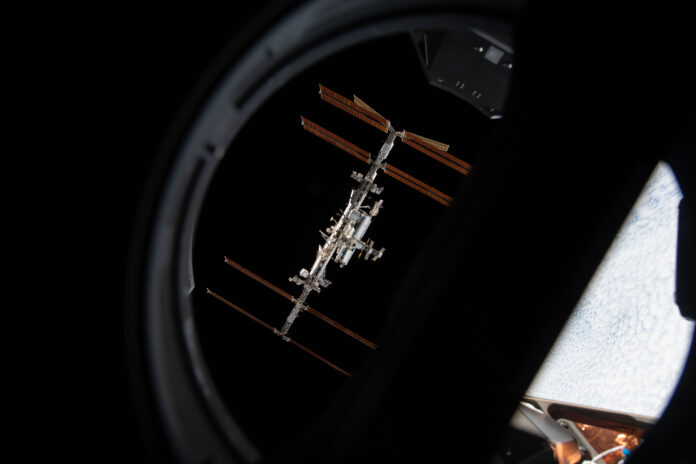
Two of NASA’s astronauts, Sunita Williams and Barry Wilmore, have been stuck in orbit since June 5th. A mission that was supposed to last eight days has turned into a frightening nine months, with NASA confirming in August that they would not return until February 2025.
The two were on a flight to the ISS on a Boeing Starline Spacecraft, which faced significant issues the day after takeoff, including several helium leaks in the propulsion system and malfunctioning thrusters.
Five of the twenty-eight reaction control system thrusters ceased to work, causing the docking to be delayed by an hour. Fortunately, four of them were restored, allowing the astronauts to complete their journey to the space station.
NASA and Boeing engineers used a test engine at the White Sands Test facility in New Mexico to study the thrusters’ performance and to investigate what went wrong. The engines and thrusters were subjected to conditions similar to what the spacecraft faced on its way to the space station. A “hot fire test” was also conducted, which involved firing Starliner’s thrusters in short bursts while it stayed docked at the space station. The test trials gave evidence of a tiny Teflon seal swelling up due to high temperatures, blocking the propellant flow into the thrusters.
NASA’s Commercial Crew Programme Manager stated that whatever occurred in orbit couldn’t precisely be replicated on the ground, so their test trials were just a way to estimate what could’ve gone wrong during the mission.
Surprisingly, the team knew about one of the helium leaks in the propulsion system before the Starliner launch but said at the time that the leak was manageable and wouldn’t compromise the mission. Obviously, that was not the case, as officials detected several more helium leaks at the top side of the capsule’s service module.
To rescue both astronauts, SpaceX is sending the next Crew Dragon to the International Space Station with a downsized crew. As NASA changes space station crews approximately every six months, the new crew will have two empty seats reserved for Wilmore and Williams to return home. This mission, launched on 29th September 2024, will not bring the astronauts home until February 2025, as they can’t return earlier without interrupting other missions.
There haven’t been any official reports yet, but it’s well-documented that astronauts face health issues due to prolonged exposure to microgravity and radiation. Over eight months is a long time to be stranded. Williams and Wilmore might be dealing with Spaceflight Associated Neuro-ocular Syndrome (SANS), a condition observed in astronauts that affects the eyes and brain during and after extended space missions. Exposure to microgravity also leads to loss of muscle mass and bone density. Astronauts experience more radiation in Space than on Earth as well, which leads to a raised risk of cancer and other radiation-related health issues. Space agencies carefully monitor radiation levels and equip spacecraft with protective shielding to reduce exposure, but the long-term effects of radiation continue to be a significant concern.
For Williams and Wilmore, this unexpected extension has become a test of endurance, resilience, and patience. As they wait in ISS, the experience serves as a sobering reminder of the inherent risks of space exploration. Their situation, where minor technical issues have spiralled into months of uncertainty, emphasises the intricacy of space travel.
While NASA and Boeing continue to investigate the failures, the situation highlights the complexities of space travel, the challenges of preparing for unforeseen obstacles, and the risks that astronauts take as boundaries of space exploration are pushed.
