

By Zoe LaMonte
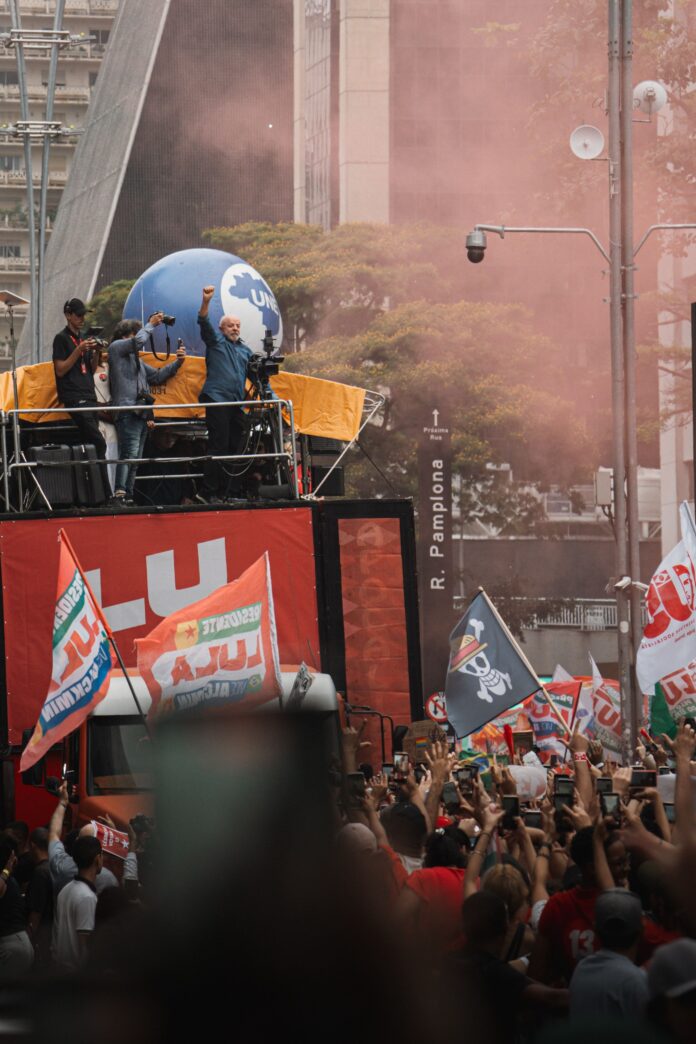
Flavio Bolsonaro has lost the race for Brazil’s presidency to Luiz Inácio Lula da Silva, only four years after his father met the same fate in the 2022 election. Bolsonaro has fled to Miami in the wake of his loss as investigations into his alleged money laundering and fraud continue back home.
Brazilian elections are held in two rounds. A candidate must receive more than 50% of votes in the first round to be declared the incumbent. Should no candidate reach this fifty percent minimum, a second round of voting takes place three weeks later, with only the top two candidates being included on the ballot.
The 2026 election saw Flavio Bolsonaro leading the first round with 47% of the vote to da Silva’s 45%, making da Silva’s subsequent victory in the second round all the more surprising. Following da Silva’s 4.4 million vote victory, Bolsonaro called for an annulment, claiming that the win was “inexplicable” and insisting that results were skewed due to Supreme Court Justice Cristiano Zanin’s decision to keep polls open for two more hours nationwide. However, both candidates had been pushing for this extension.
Flavio Bolsonaro is a member of Brazil’s Liberal party, the dominant far-right political party in the country that was formerly led by his father, Jair Bolsonaro. The elder Bolsonaro is currently serving twenty seven years in prison after being convicted of organizing a coup d’etat attempt following his defeat in the 2022 election. The coup d’etat included plans to assassinate da Silva, the vice-president elect, and Supreme Court Justice Alexandre de Moraes. Jair Bolsonaro has also been the center of other, more minor scandals in the past, including making controversial statements about a fellow congresswoman’s sexual assault, saying that “she did not deserve to be raped; she’s too ugly”.
Flavio Bolsonaro’s campaign centered around many points that are traditional to most far-right agendas, as well as amnesty for his father. The campaign also included his official plan to improve public safety, labeled as “Brazil Without Fear”. Though crime has been on the decline, many Brazilians still feel that it is one the largest problems facing the country. In 2025, Brazil’s murder rate was 19 in 100,000 people, and just ten years ago, it was 30. Many Bolsonaro supporters believe that previous administrations, da Silva’s included, have not done enough to crack down on crime. Bolsonaro has called for all Brazilian criminals organisations to be officially labeled as narcoterrorist organisations and to increase the amount of government resources deployed to bring them to justice.
Da Silva’s campaign pushed the idea of “defense of democracy”, both as a clear response to 2022’s attempted coup and as a call to increase investment in Brazil’s defence and military-industrial capability. He also advocated for investment into AI, increased social programs for the elderly, resource allocation to combat violence against women, and adjustments to Brazil’s governmental social welfare program, Bolsa Familia.
Following da Silva’s victory, Bolsonaro offered no public statement regarding his defeat and his location was unknown for several hours. It was eventually revealed that he had fled the country. Immediately after the election, Bolsonaro had received a court order to surrender his and his family’s passports to federal police as part of the ongoing investigations into alleged fraud and money laundering; Bolsonaro refused to comply with the court order.
According to authorities, he and his family crossed the Argentinian border following the finalisation of the election results on Sunday, October 25. From there they boarded a private jet that made a brief stop in Ecuador before departing for the United States. Independent reports from various US media outlets stated that the Bolsonaro family arrived in the U.S. sometime in the night on October 27, just two days after the results of the election were confirmed.
Bolsonaro had garnered the unofficial support of US President Donald Trump during his campaign, and as he arrived in Miami, a representative of the US State Department announced that visas would be granted to him and his family.
The candidate then took to social media to address his sudden departure from the country online, referring to himself as the “true leader of Brazil” and claiming that the results of the election were “mathematically impossible”. He said that he “did not flee Brazil; [he] left for the sake of Brazil”. He also insisted that the various charges against him are nothing more than a political witch-hunt, claiming that he is the victim of a coup d’etat and the subject of unfair political persecution.
President Trump, when asked to comment on Bolsonaro’s flight to America and the claims of election fraud, told reporters that he “won’t get involved”, though he has since declared that this election was “a very great embarrassment to the people of Brazil”.
Reaction from University of Aberdeen students
Carvão Michelon, a social sciences student at the University of Aberdeen and a native of Brazil, provided some context for these events, telling The Gaudie that both Bolsonaro and da Silva are under investigation for money laundering and fraud, which has exacerbated political tension ten-fold, as both parties claim the other is corrupt.
Michelon also said that politics in Brazil are deeply entangled with the military due to the fact that the country was under a military dictatorship until the 1980s. Bolsonaro, they said, is very friendly with military organisations and much of his support has been garnered through those connections, with many of Bolsonaro’s supporters “hav[ing] ties to, or respect for, the military”.
The student also compared Lula and Bolsonaro to the United States’ Donald Trump and Kamala Harris, though added that Lula might be considered a “worse” version of Harris by many, given his alleged involvement in money laundering.
Brazil’s new presidential term will begin on January 5, 2027. Lula will be sworn in for a historical fourth term and will serve until 2030.
Edited by Spiro Kass
