

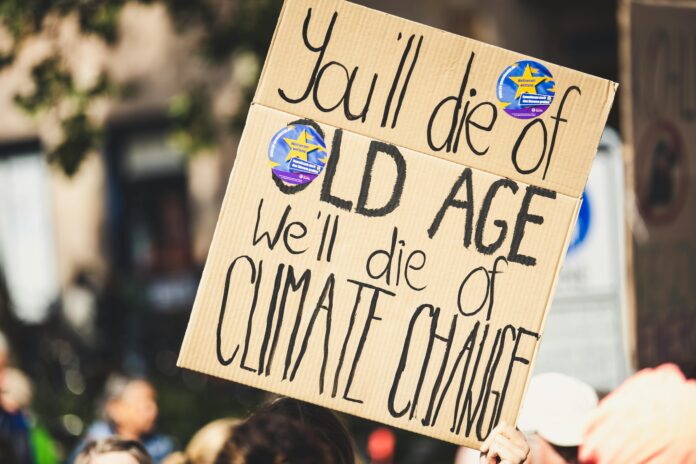
Who remembers COP 28? A couple of months ago, it was the subject of pretty much every news outlet, largely due to its controversy: being held in one of the world’s oil capitals, the incriminating words of Sultan Al Jaber; the head of the conference who claimed he wanted to use it to procure more oil and gas deals, the increasing corporate influence of it all. There are a lot of reasons why people may question its authenticity. To get a better idea, Opine welcomes UoA lecturer Mitchell Lennan, who has some insights into what actually goes on across the oceans and behind closed doors.
But first, some history. The first ‘Conference of the Parties’ or COP1 was held in Berlin in 1995. Since then there have been many international climate treaties, such as the United Nations Framework Convention on Climate Change, or the UNFCCC (1992). Novel in many ways, the UNFCCC defined climate change as a concept, and placed emphasis on its signatories to take precautionary measures to anticipate, prevent, minimise and mitigate its adverse effects. Though one of the more prominent ones, the UNFCCC is by no means the only major treaty created in recent years. The 1997 Kyoto Protocol formed top-down responsibilities based on countries’ historical contribution to climate change. In other words, management makes a decision which the workers follow; a good idea in theory. However it was seriously flawed with major concerns over its unfair nature. A little bit of a flop to be honest.
Roll on the Paris Agreement of 2015, which really showed promise. Unlike its predecessors, the Paris Agreement created bottom up targets, improving cohesion and communication between parties. It also differs from previous treaties by not prescribing content for signatories to fulfil; instead, it advocates for nationally determined contributions, all with the aim of limiting the global temperature increase to below 2℃ above pre-industrial levels. This agreement proved very popular, with nearly global participation. Yet as a planet we are still struggling to meet our targets.
All these treaties and so little progress. It seems to many that the agreements, and the summits they are born from, are a waste of time and resources which could be better spent elsewhere. But I’m no expert, so how about we hear from someone who isn’t restricted by student loans and tutorials? I was lucky enough to be able to speak to Mitchell, who has a joint background in marine biology and international law, and a keen interest in the interaction (or lack thereof) of law, policy making and science.
The biggest question I had about COP28 is how can anyone justify its international locations? Surely this is an oxymoron: we want to make a dent in climate change, yet we are flying people halfway across the world rather than holding an equivalent meeting online, Zoom gremlins notwithstanding. The answer was threefold. The first thing to remember is that according to the International Civil Aviation Organisation (ICAO), civil aviation only makes up 2% of global emissions. Having said that, 315 people took private jets to COP27 – not the best example to set the rest of the world, is it.
Second, the countries party to the UNFCCC have all agreed that the meeting will be in a different place each year. There is a logic to this: for many parties it is a huge disadvantage when COP is held outside their region due to financial pressures – rotating the location facilitates participation, as well as observation and protest. On top of that, the logistics of conducting this kind of summit online are astronomical. We all know that Zoom and Teams can be trying; I’ve seen it struggle with twenty, let alone the 85000 participants that the UN Climate Change website recorded attended COP28. If you add in the national law requirements for in person negotiations and time differences, it does seem quite impossible.
However, there are major flaws in the process. Unfortunately, COP28 saw the fossil fuel industry have incredibly favourable conditions. Combined with scepticism about transparency and OPEC’s (Organisation of Petroleum Exporting Countries) outrageous attempts to undermine the phasing out of fossil fuels, COP28 can – and dare I say does – come off as a sham. But it’s not all bad news: COP28 saw the first ever Global Stocktake, examining all global climate action since the Paris Agreement came into force. This led to what the UNFCCC referred to as the “beginning of the end for fossil fuels”. A lofty ambition, but as this relies upon implementation at national level, I do question how this statement will be realised. As countries we can absolutely talk the talk, but can we walk the walk?
Though we may not agree on some aspects of COP28, when I asked Mitchell about civil society (people like you and I) and their input, we found common ground. We both agree there should be more opportunities for diverse participation. Though there are plans for a children’s dialogue at the June Bonn Climate Conference, there is always more to be done. This leads onto the eternal question of what could be changed to improve COP28. From Mitchell’s perspective, the conference as a whole was overwhelming – “physically, intellectually and emotionally exhausting”. Though this may simply be a byproduct of such a hyper focused event, could the draining nature of COP summits be unintentionally hampering progress? There are many other national and international processes trying to mitigate and manage climate change, hopefully the overall impact will be a solid action plan to tackle one of the most pressing global issues of the 21st century.
So is COP28 a force for good, or simply a cop out? Overall, it seems that communication is the key issue, as is the case with many international schemes; we need to act cohesively, which does not seem to have been happening that much so far. There is also a question of national responsibility. COP28 provided guidance, but it is ultimately up to individual countries to implement it. Though we agree the world over that fossil fuel exploitation must end, the lack of incentives, either reward or sanction, is slowing this down. It is not enough to overcome the indolence of profit-oriented systems such as the oil industry. Without doubt, change is on the horizon, but will it be for the better?
