
By: Oliver Kennedy and Innes Paton
“Death is better than a bitter life, and eternal rest than a continual sickness. For sorrow hath destroyed many.”
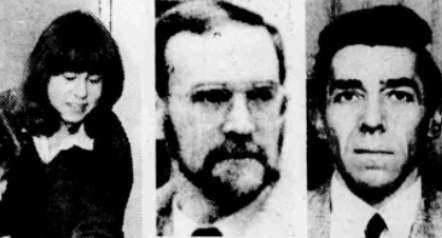
These are the words that Dr Donal Byrne chose to have by his side when he injected himself with a lethal overdose of insulin on August 7, 1988. Less than 24 hours after the popular lecturer in Art History was found dead, another academic at the University of Aberdeen was discovered to have committed suicide. Dr Nicola Mackie, a highly-regarded and respected scholar in Classical studies. She sent an alarming letter to a colleague and was found dead later that day at the young age of 33. This double tragedy was compounded three weeks later when Richard Hallet, a lecturer in Russian, was found in a coma after a suspected insulin overdose- just like Byrne. He died in Aberdeen Royal Infirmary two weeks later.
Rather than a sense of excitement building for the quincentenary in 1995, austerity at the University of Aberdeen during the 1980s threatened swathes of jobs. The infamous 1981 cuts to funding across the UK thrust the university into financial turmoil, with 200 jobs lost. In 1987, the university proposed a further 245 redundancies and the closure of six departments- Classics included.
A letter written by Dr. Mackie and signed by her colleagues in the classics department was sent to the university 18 months before her death. Highlighting the importance of their department, the letter stated, “It would be ‘tidier’ to close Classics, in the sense that a person who amputates his own hand has one less limb to worry about.” Their voices were not heard. The department was closed in 1989.
Such was the impact of the suicides, ‘The Aberdeen Problem’ became the shorthand throughout Britian for a new and devastating wave of stress experienced by staff members at universities facing the harsh economic realities of the late 1980s.
And now, in 2026, the picket lines are packed with pink beanies and placards, and staff are discussing the stress they feel once more. Court will decide soon whether to pursue the cuts to the structure of this university proposed by Senior Management. Principal Peter Edwards, who joined the university in October 1988, rejected a deal with the striking staff which would have ensured lecturers’ job security for six months.
Most worryingly, the names of Byrne, Mackie, and Hallett have resurfaced. The headline from The Gaudie edition on the 5th of October 1988, “Staff deaths cloud new term,” has reverberated through staff circles.
Professor Benjamin Martin, whose wife Rachel is the second cousin of Dr Mackie, works in the School of Natural and Computing Science at the University of Aberdeen. Like many others, Prof Martin has been foregoing his wage to stand alongside his UCU peers with several days of strike action over the last two months. He says, “Everyone is concerned about their employment, so they cannot focus on their jobs.” He followed this up by saying, “there is a lack of foresight, a lack of planning, and leaving out the human impacts just feels entirely wrong.”
Rachel Martin shared a letter with The Gaudie that was sent from Dr. Mackie’s mother to her grandfather just after the academic’s suicide. The letter highlights the stress and responsibility that Dr. Mackie felt towards Classics teaching at the University. Mrs Martin said, “she loved Aberdeen, this was her home. Her mother knew she was upset about the situation at the university.
“It was not about her own job, it was about the discipline and how integral it was to the university.”
The cuts proposed by Senior Management will need to pass through legal hurdles before they come into effect. Last month, University Court voted to merge 12 schools into four faculties, but failed to decide on controversial minimum student number thresholds. Prof Martin explained, “Senior management was ready to go ahead with their cuts, so it is clear the court has been asking questions.”
With the Court set to discuss the proposals again at the end of May, Benjamin urged them to take into account the human impacts. “I have raised the issue of Nicola to Court, they should remember that while in discussions,” he said.
Mrs Martin urged the university to remember what happened in 1988, sending the message to Court: “You should learn from History. Remember Nicola. Do not make the same mistake.”