
While significant international attention over recent weeks has turned to events in Greenland, Venezuela and Iran, the conflict in Ukraine continues. Now nearly into its fifth year, the war has now been ongoing for longer than the Soviet Union’s fight against Nazi Germany in World War Two.
The situation on the frontline has not changed dramatically since 2022, when Ukrainian offensives pushed Russian forces out of Kherson and defeated the Russian advances into northern Ukraine. Since then, Russian forces have crept forwards in the eastern Donbas region and southern oblast of Zaporizhzhia. Ukraine’s 2024 offensive into the Kursk region of Russia was ultimately met with failure, with border fighting continuing and Russian forces having made limited counter-incursions into Kharkiv oblast.
According to the UK Ministry of Defence’s intelligence update, Russia suffered 400,000 casualties in Ukraine during 2025, far higher than the figure for Ukrainians at around 100,000, according to BBC estimates. The United Nations has placed last year’s civilian casualties in Ukraine at around 2,500, the highest annual count since the conflict’s beginning in 2022. Large-scale Russian airstrikes on civilian targets and infrastructure in January forced President Zelenskyy to declare a state of emergency.
Posting on X in the aftermath of the strikes, Zelenskyy wrote: “Last night, Russia continued striking our communities and our energy sector. Dnipro, Zhytomyr, Zaporizhzhia, Kharkiv, and Kherson regions came under attack. The main target was energy facilities and critical infrastructure that ensures normal life for our people.”
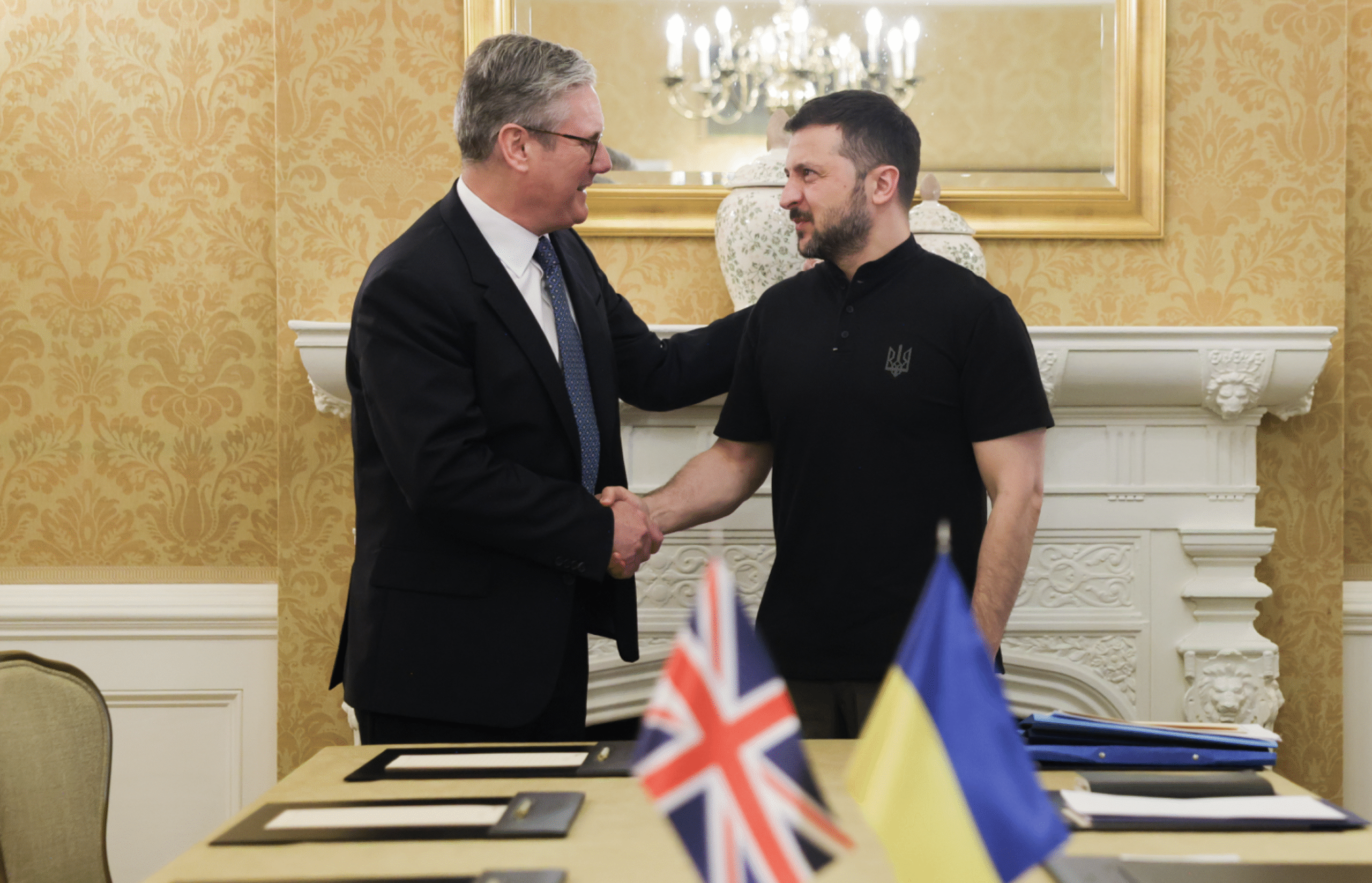
Amid American attempts to arrange a ceasefire deal between the two states, France and the UK have now revealed some plans for a peacekeeping force which will enter Ukraine in the event a peace deal is secured. The Multinational Force for Ukraine (MNFU) will be equipped with much more sophisticated equipment than typical peacekeepers that operate under the United Nations. The UK Government has announced that £200 Million has been allocated to prepare elements of the British Army to deploy to Ukraine.
Furthermore, although the soldiers and vehicles of the MNFU will be based inside Ukraine, the mission will be headquartered in Paris under a 3-star commander. Additional command facilities will also be set up in Kyiv, to allow the MNFU to coordinate with the Ukrainian Government. Speaking earlier in January, UK Defence Minister John Healey stated: “We are surging investment into our preparations following the Prime Minister’s announcement this week, ensuring that Britain’s Armed Forces are ready to deploy, and lead, the Multinational Force Ukraine.”
European countries have also begun placing additional economic pressure on Moscow by targeting Russia’s shadow fleet. The UK provided limited support to American forces in seizing the Russian and Venezuelan-linked tanker Marinera in the North Atlantic on the 7th of January. However, since then UK ministers have insisted that “The UK will continue to step up our action against shadow fleet activity.”
The French Navy coordinated with the UK and other allied nations to capture the Russian tanker Grinch on the 22nd. This is significant as the previous UK-US operation could be considered overflow from recent events in Venezuela, whereas this disconnected operation demonstrates a more sovereign European effort to up the pressure on Moscow.
Russian shadow fleet vessels do not meet international regulations, the seizures of both ships are legal under the United Nations Convention on the Law of the Sea. The ships frequently reflag and sail without AIS identification systems active, allowing Russia to continue trading despite international sanctions.