
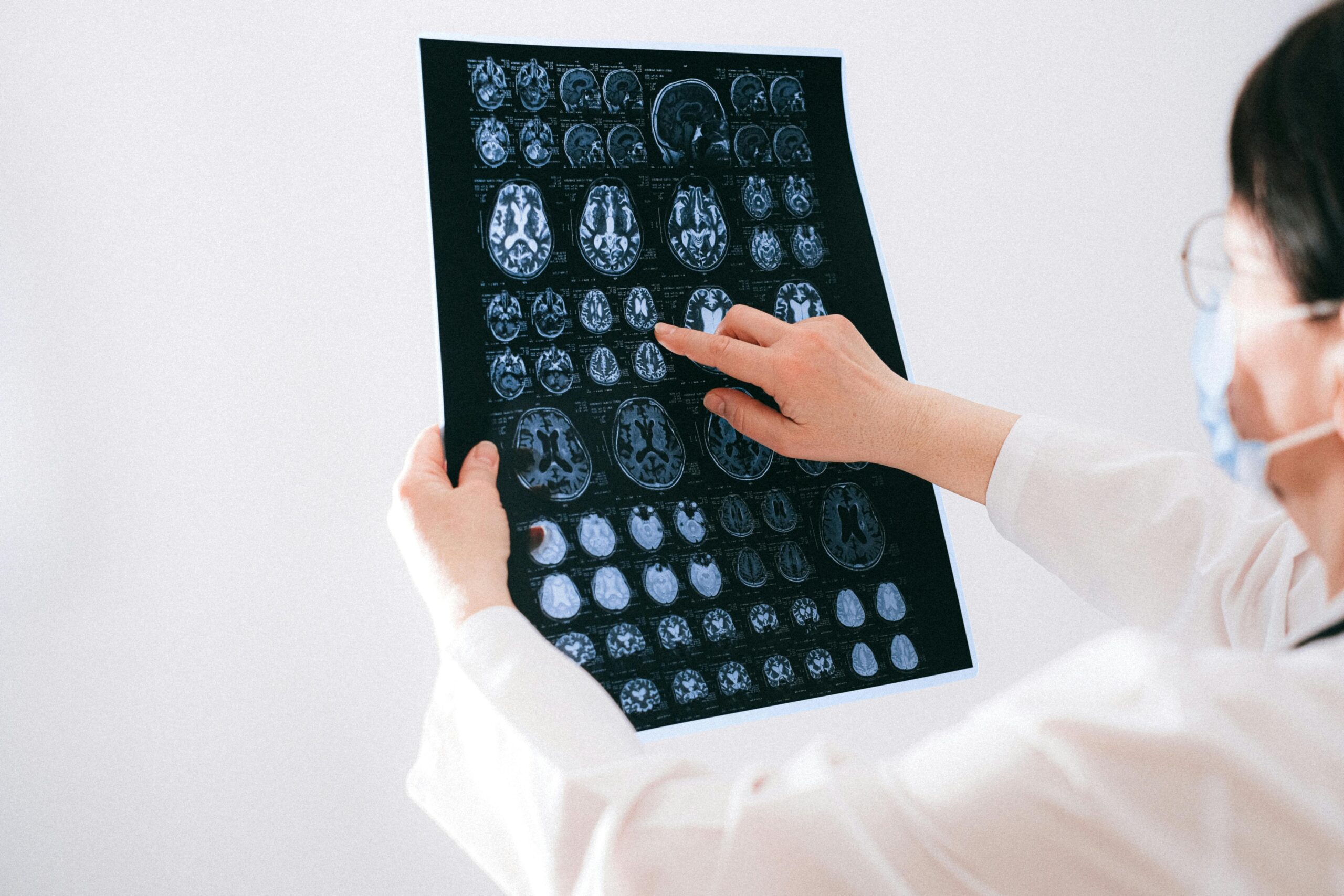
Artificial Intelligence (AI) has without a doubt become a major facet of modern debate. It is increasingly present in the content we consume online and has even made its way into contemporary artwork and music, sparking questions about the ethics of its use. While the arguments against AI clearly have legitimate grounds and should not be ignored, the ways in which advancements in AI technologies are transforming medical care in our day and age equally deserve recognition. Recently, the relevance of AI in medicine was demonstrated by a surgical team from University College London who used an AI system to carefully remove a patient’s brain tumour, preventing him from losing his vision.
Despite this feat only gaining widespread media attention now, the story actually started almost two years ago when a man, Rhys Hibbert, was diagnosed with an 11 millimetre-sized tumour in his pituitary gland. Albeit small, the pituitary gland is an important brain structure that secretes different hormones, allowing it to exert an effect on a variety of bodily functions, including growth, metabolism, and blood pressure homeostasis. Having a tumour in this gland can have severe consequences on an individual’s quality of life over time, making surgical intervention necessary in certain contexts. However, the location of the pituitary gland can make surgery difficult. The gland is surrounded by nerves and blood vessels that enable us to see, and even the slightest mistake could result in permanent vision loss and even mortality.
This is where AI plays a crucial role. Professor Hani Marcus, a consultant neurosurgeon, and Danyal Khan, a surgical resident, removed Rhys’ tumour using an AI tool that makes intricate surgeries much easier and safer. The tool was able to provide immediate detection of contact between surgical instruments and human tissue, relaying this information to the surgical team during the procedure. Using different colours, it emphasised crucial parts of the brain, allowing the surgeons to circumvent any sensitive areas. The AI system was designed by scientists at the UCL Hawkes Institute and operates on an NVIDIA Clara IGX platform, a type of AI platform specially created for clinical use. Prior to being used on a human being, the device underwent thorough assessment and preparation, which involved being trained using data from a range of recorded pituitary surgeries.
After Rhys’ diagnosis in 2024, his condition deteriorated over the course of time, particularly with regard to his sight. If he had not had this vital surgery, his tumour would have progressively become larger, leading to him eventually losing the ability to see. His surgery took place in London at the National Hospital for Neurology and Neurosurgery, representing the first time in the history of medicine that AI was able to aid a neurosurgical procedure. Despite being performed in May of 2026, the announcement of the surgery’s success was postponed to allow time for Rhys to fully recuperate.
The achievement of this incredible milestone was a result of financial support from Google and the National Institute for Health and Care Research. The Wellcome Trust, the Royal College of Surgeons, and the Engineering and Physical Sciences Research Council also supported the project.
As of now, Rhys is able to see just like he used to, which would have been unthinkable prior to the removal of his tumour. While the uncertainties surrounding AI remain, his surgery undoubtedly highlights how it can be harnessed for good. With further research and the development of new technologies, his remarkable story may only mark the beginning of a new wave of AI-assisted procedures.