
By Emma Barclay
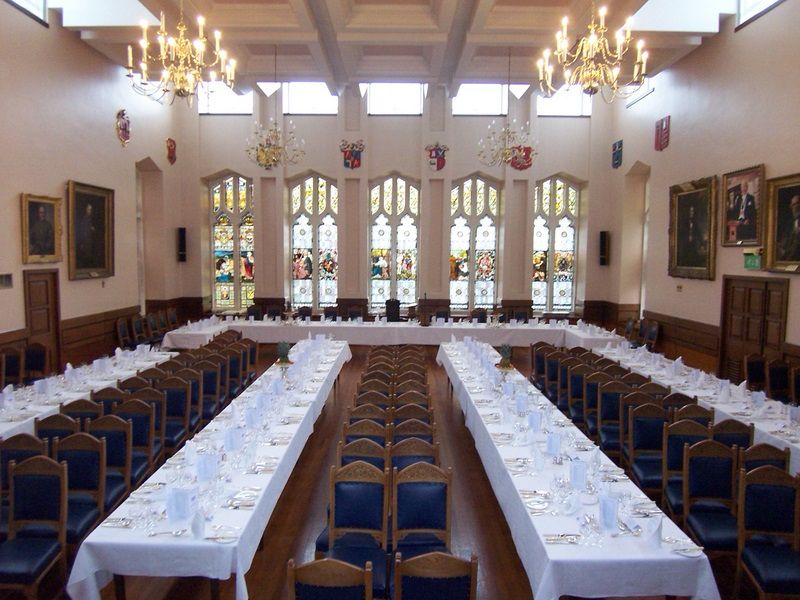
In November I was lucky enough to attend the launch of Graeme Nicol, Alexander Sutherland and George Leslie Donaldson’s book: The Seven Incorporated Trades of Aberdeen: A History of Helping to Shape a City and Its People. The event was held at Trinity Hall, a spectacular building symbolising Aberdeen’s history. The book provides a comprehensive history of The Seven Incorporated Trades of Aberdeen and their respective impacts on the community and the city.
The writing of this book spanned almost ten years – a testament to The Seven Incorporated Trade’s significance in Aberdeen. Formed in 1587 The Seven Trades include: Hammermen, Bakers, Wrights and Coopers, Tailors, Shoemakers, Weavers and Fleshers. Since the beginning The Seven Trades have been integral to Aberdeen’s development, both in the economy and the community. Their philanthropy has facilitated the construction of a vast number of Aberdeen’s buildings and their trade has helped fuel the economy.
The first history of The Seven Incorporated Trades was written in 1887. Aberdeen has inevitably grown and changed since then, making it even more important that this updated history was written. Over the past few centuries Aberdeen has been a huge pillar of trade for things like fishing, agriculture and oil, making the city very economically significant. This book explores that significance by giving detailed accounts of how The Seven Incorporated Trades impacted Aberdeen’s economy. As well as influencing the economic history of the city, they have also impacted its social history. The organisation places a large focus on community outreach and charity which has vastly benefited the public, something which many Aberdonians may be unaware of. The book shines light on the service done by the Seven Trades which has so greatly contributed to the city.
Following the book launch, I had the opportunity to meet with author Graeme Nicol to further discuss its importance. He explained how deeply tied Aberdeen’s history is to The Seven Incorporated Trades and how important it is to understand the connection. Graeme discussed how places in the city, many of which people will walk past without a second thought, have a deep and unique story behind them – often leading back to The Seven Trades. For example, Dr Wiliam Guild, principal of Kings College 1640-1651, whose name you might know through the William Guild building on the university campus, gifted The Seven Incorporated Trades their first Trinity Hall on Shiprow.
When conducting the research for his book Graeme was exposed to an array of facts about the city of Aberdeen which he shared during our meeting. I learned how the stained glass windows currently in Trinity Hall were actually taken from the previous Trinity Hall, which stood on Union Street. Those windows are a piece of history which represent hundreds of years of trade, charity and community brought about by The Seven Incorporated Trades. My perspective on Aberdeen had completely pivoted after our conversation; it gave me a heightened appreciation for my own university campus and the city in general. This feeling really underlines what the book is about – uncovering the history of the city and The Seven Incorporated Trades.