
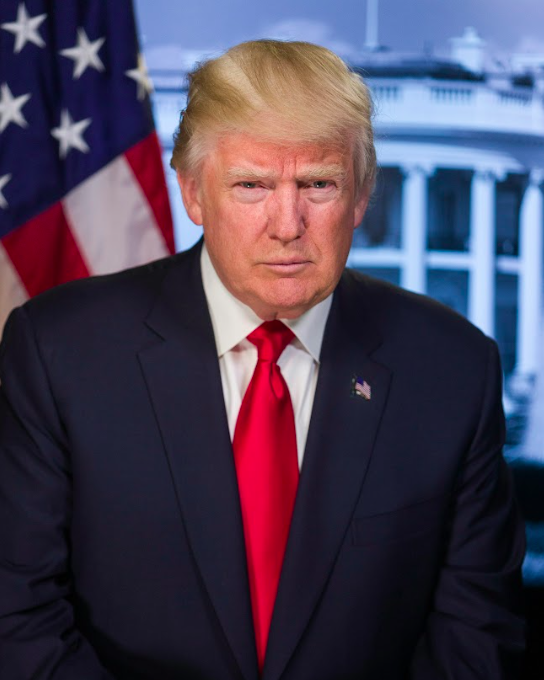
Jan 20th 2025 will see the inauguration of president-elect Donald J. Trump, and along with it a concerning and uncertain future, not just for the United States, but the world. With a shift in America’s international role, scale back of federal government efforts on human rights and devastating slashes to climate initiatives all looming, it is safe to assume his second term will be nothing like his first.
Economy
First and foremost, the economy was said to be the top issue amongst voters in the 2024 presidential election. A Gallup poll found that 52% of voters said the candidates’ position on the economy is an “extremely important” influence on their vote.
The result of the election may then come as a surprise, as, according to most economists, Trump’s economic pledges would likely backfire. Trump has claimed he would boost economic growth by cutting taxes, eliminating regulations on businesses and imposing a 10% tariff on all products imported to the US from overseas, something he believes will secure American jobs and force companies to return production to the US.
Trump also proposed a levy of 60% or more on Chinese goods, creating a similar trade war to the one during his first term. This is likely to increase the price of goods, effectively generating a new tax on Americans, and could cause a recession. According to the non-partisan Peterson Institute for International Economics, if these tariffs were executed, a quintessential middle-class household would face an estimated $1,700 a year in additional costs.
Regarding taxes, Trump’s tax policies typically favour corporations and wealthy Americans. It is expected he will drive Congress to extend his tax cuts from the 2017 Tax Cuts and Jobs Act, which are set to expire at the end of 2025. He has also proposed lowering corporate taxes to 15% from their current level of 21%. If Congress does this, income taxes would decrease for Americans of all incomes, however, the greatest recipient would be high-income Americans, according to an analysis by the University of Pennsylvania’s Penn Wharton Budget Model.
Overall, it is estimated that Trump’s proposed tax cuts would lower federal income by $5.8 trillion over the next decade, adding to the nation’s debt.
Healthcare
Since his first run for president in 2015, Trump has called for the repeal of the Affordable Care Act – an Obama-era law which aims to make affordable health insurance available to more people. He has not proposed a replacement, but, at the September presidential debate, claimed he had “concepts of a plan”. Trump has said he would not cut Social Security or Medicare benefits, but has not delivered a clear plan to keep the programs running. Trump spoke very little of Medicaid during the campaign, however during his first term, he reshaped the program by allowing states to introduce work requirements for recipients.
Abortion
Another crucial voting matter for Americans this year was abortion. Polls have consistently shown that most of the American population think abortion should be legal. During his first term, Trump appointed three of the US Supreme Court justices who were part of overturning Roe v. Wade, ending federal protections for abortion.
In perhaps the most revealing moment of the campaign, Trump said in the September presidential debate that “For 52 years, this issue has torn our country apart,” and “I did something nobody thought was possible.” He has repeatedly commended the Supreme Court for overturning Roe v. Wade, whilst touting that he is “proudly the person responsible” for the overturning of Roe.
During the debate, Trump was asked if he would veto a national abortion ban – a question that he did not give a clear answer to. Trump has also said he would not sign a national abortion ban but that “states are going to make those decisions.” Earlier in the campaign, his running mate JD Vance said that he had committed to a national abortion ban, which was quickly rejected by Trump. It is not clear if his administration would defend so ardently as the Biden administration on the legal challenges seeking to restrict access to abortion pills, including mifepristone, or if Trump would continue to enforce Biden’s guidance that hospitals must provide abortions for women who are in medical emergencies, even in states with strict bans.
Immigration
In Trump’s first presidency, he enacted anti-immigration policies, most notoriously, separating migrant children from their parents. At his final campaign rally in Pennsylvania, and for much of his campaign, Trump promised to mass deportations of migrants. “We’re going to have the largest deportation in the history of our country,” he told reporters during a news conference. Not only does this effort to detain and deport people by the millions raise legal and human rights concerns, but it would also be costly.
Climate
“Drill baby drill” became a war cry at Trump’s campaign rallies this year. Trump is a stark denier of climate science, and discredits renewable energy. In his previous term, Trump cut back more than 100 environmental protection regulations, many of which were aimed at preserving clean air and water. When he returns, he has pledged to rescind “every one” of Biden’s climate regulations. Perhaps the most striking of all, during his first term, Trump withdrew the US from the Paris Climate Agreement. Thus, it is no surprise that Trump’s record on climate issues has prompted warnings from scientists.
National Defense and America’s Role in the World
Trump has an isolationist approach to international politics. He has insisted in his campaign that he can end Russia’s war in Ukraine and the Israel-Hamas war, with little explanation of how. Moreover, he has been critical of NATO and has frequently commended authoritarians such as Hungary’s Viktor Orban and Russia’s Vladimir Putin.
What is important to note is that Trump will be taking on the role of commander-in-chief amid the bloodiest war in Europe since World War II. Ukrainians have vocalised their concerns for months that Trump could pressure Ukraine to cede ground to Russia by withholding military and financial support. So far, the United States’ support to Ukraine has been a lifeline. A decrease in support would be detrimental. Furthermore, Trump supports Israel in its war in Gaza and has denounced pro-Palestinian demonstrators in the US, whilst urging Israel to “finish up” the war. He said recently that he doubted a two-state solution was possible.