

By Spiro Kass
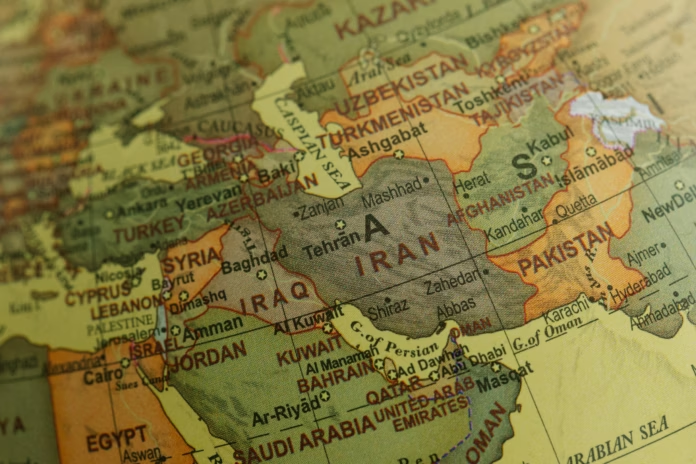
Turkey, Pakistan, and Saudi Arabia announced a new defensive pact in Mecca last August. The Mecca Joint Defence Agreement, mirroring NATO’s Article 5, stipulates that an attack on one of these states constitutes an attack on all the others
A similar agreement was signed between Saudi Arabia and Pakistan last year, and it has now been expanded to include Turkey. The text of the new agreement has not yet been released.
Given the fact that the US-Iran conflict is still an ever-present security concern in the region and Turkey and Saudi Arabia’s tensions with Iran, questions have emerged regarding the strategic purpose of the agreement.
Rabia Akhtar, professor of International Relations at the University of Lahore, said that “Pakistan has an enormous interest in ensuring that this arrangement is not perceived as an anti-Iranian or [anti-]Shia security block,” citing the security concerns that would cause for Pakistan.
Despite the fact that Pakistan has nuclear weapons, Akhtar cautions against viewing the agreement as a Pakistani nuclear umbrella over the other two countries. “Pakistan’s nuclear weapons were developed with a very specific South Asian deterrence framework – principally in relation to India,” Akhtar noted. Because of this, she believes that the nuclear deterrence angle is somewhat limited, though not completely irrelevant.
The Article 5-esque stipulation is not the only important aspect of the agreement. It also is a move towards increased defence industry cooperation among the three countries, focusing on “unmanned and autonomous systems, electronic warfare and artificial intelligence capabilities.”
Neither the United States nor Iran have spoken against this agreement, reflecting the lack of a targeted or hostile posture from the signatory countries.
Equally, the lack of a uniform strategic vision or threat perception among the three states signals potential issues. Chatham House analyst Bilal Y. Saab notes that Saudi Arabia’s military does not “have the capability” to handle contingencies in, for example, South Asia. “They don’t even have the expeditionary mindset or approach,” said Saab. “The Saudis are very insular.”
According to the Turkish foreign ministry, the Mecca Joint Defence Agreement will work similarly to NATO. Although it is difficult to see the agreement as a NATO analogue just yet, it is already factoring into geopolitical events, such as the ongoing conflict between the Houthis and Saudi Arabia, which The Gaudie reported previously. “If there is unprovoked aggression, or a spillover of whatever is happening in Yemen into Saudi Arabia, definitely the Mecca agreement will become operational,” said the Pakistani Minister of Defence, Khawaja Asif, emphasising that Pakistan would be obligated to intervene in some way to support Saudi Arabia in such a contingency.
However, Asif also described the ongoing civil war in Yemen, fought between the Houthis against the Saudi-backed Yemeni government, as “an internal conflict” and encouraged a diplomatic solution.
As of yet, the concrete effects of the Mecca Joint Defence Agreement remain to be seen. However, the Article 5-type stipulation marks a significant elevation of Turkish ties with Saudi Arabia and Pakistan.
Edited by Ross Munro
