

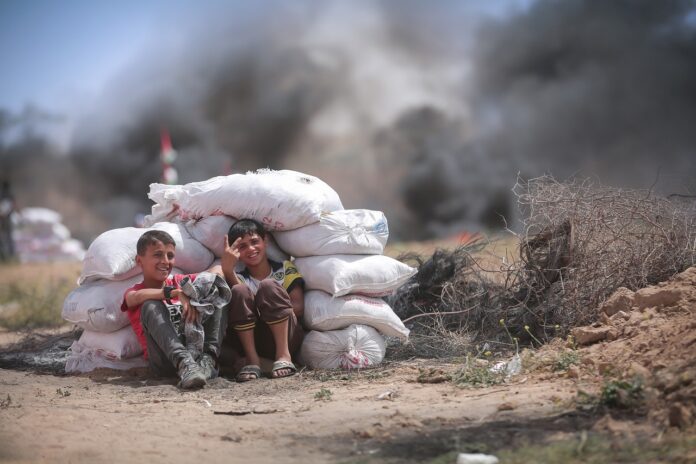
After weeks of intense violence and escalating tensions, a fragile ceasefire agreement has been reached between Israel and Hamas, the governing authority in Gaza. The truce, brokered by Egypt, Qatar, and the United Nations, has brought a tentative halt to the fighting that has claimed hundreds of lives and exacerbated the humanitarian crisis in the region. However, while the ceasefire offers a brief respite, the underlying issues remain far from resolved.
The recent conflict, one of the most intense in years, resulted in devastating destruction in Gaza. Palestinian officials report over 10,000 casualties, including a significant number of women and children, with thousands of homes reduced to rubble. Gaza’s residents now face the grim reality of rebuilding amid severe shortages of basic necessities, compounded by the ongoing blockade that restricts vital supplies. Entire neighborhoods have been flattened, leaving families homeless and vulnerable to disease and hunger. On the Israeli side, rocket attacks killed dozens and disrupted daily life, forcing many into shelters.
International reaction to the ceasefire has been cautiously optimistic. United Nations Secretary-General António Guterres welcomed the agreement but emphasized the need for sustained efforts toward a lasting solution. “This ceasefire is crucial, but it is not peace,” Guterres noted, urging all parties to uphold international humanitarian law and work toward addressing the root causes of the conflict.
The ceasefire terms reportedly include a halt to Israeli military operations in Gaza and a cessation of rocket attacks by Hamas and other militant groups. Efforts to facilitate humanitarian aid into Gaza have been prioritized, with crossings reopened to allow the entry of food, medicine, and fuel. The United Nations and humanitarian organizations have already begun mobilizing resources to address the pressing needs of the displaced and injured. Despite these measures, the scale of destruction in Gaza raises concerns about whether aid efforts will be sufficient to meet the population’s urgent needs.
Israel’s military actions in Gaza have drawn widespread criticism for their devastating impact on civilian infrastructure, including homes, schools, and hospitals. Many have called these actions disproportionate and a violation of international law, further intensifying the suffering of a population already enduring years of hardship under blockade. While Israeli officials cite self-defense against Hamas’ rocket fire as justification, the sheer scale of destruction in Gaza has prompted renewed scrutiny of Israel’s policies.
The path forward remains uncertain. Analysts warn that without addressing the core issues—including the blockade on Gaza, the expansion of Israeli settlements in the West Bank, and the lack of a viable peace process—the ceasefire may only offer a temporary reprieve. Gaza’s civilian population, already struggling under dire conditions, bears the brunt of the ongoing conflict and its aftermath.
The international community has reiterated calls for a two-state solution as the only viable path to lasting peace. Years of stalled negotiations and shifting geopolitical priorities have made this goal seem increasingly elusive. Regional powers, including Egypt and Qatar, have played pivotal roles in mediating the ceasefire, but broader involvement from global powers such as the United States and the European Union is essential to foster meaningful progress.
As Gaza begins the arduous task of rebuilding and families mourn their losses, the ceasefire serves as a stark reminder of the region’s cyclical violence. Without bold leadership and a commitment to addressing the root causes of the conflict, the prospect of enduring peace remains distant. For now, Gaza’s people endure another chapter of resilience amid devastation, waiting for the world to act decisively in their favor.
