
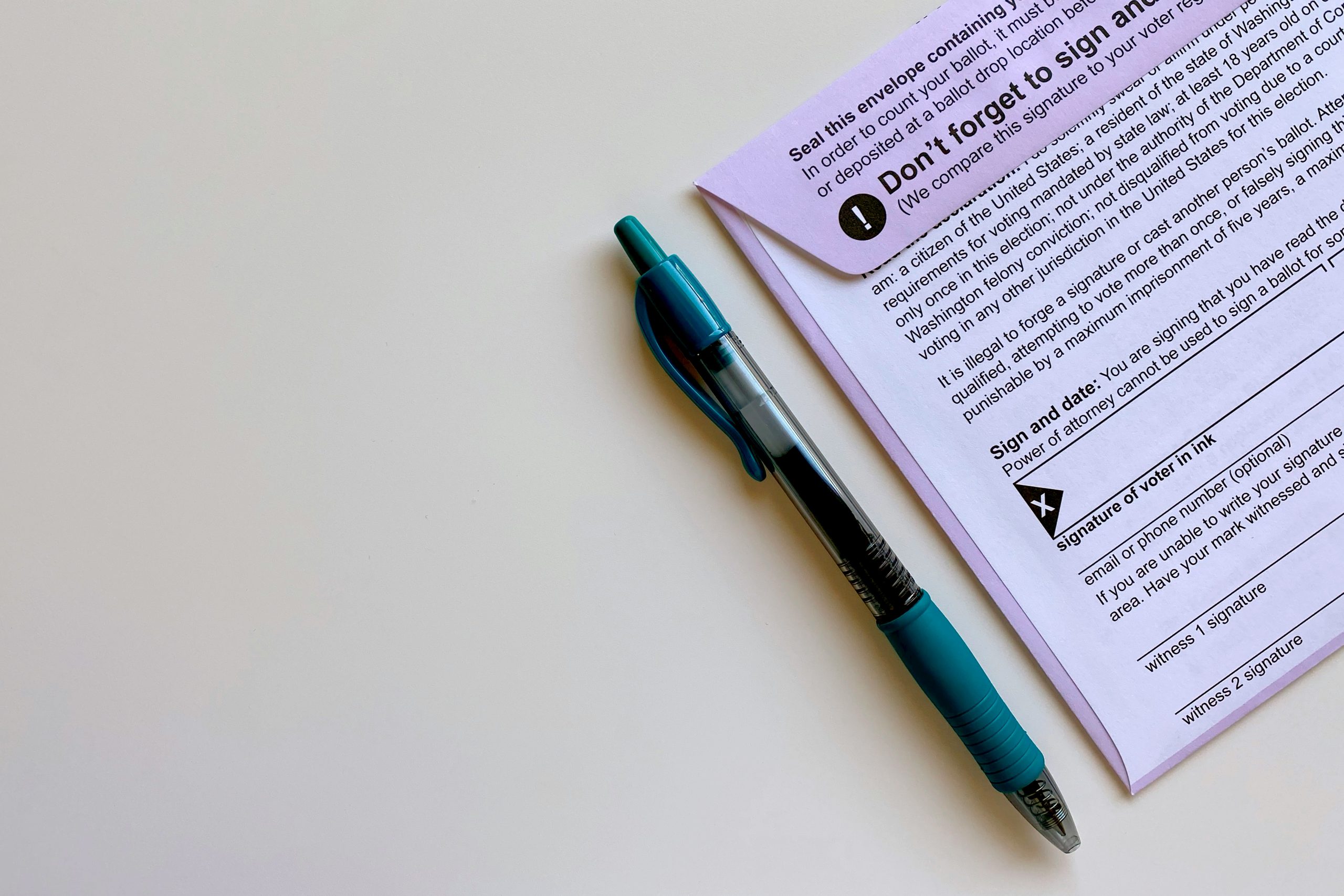
The election cycle is my favourite time to tune in to US politics. Everything is flashy and bright, in stark contrast to the prim and proper parliamentary race, where British politicians are down to earth, realistic and definitely not syphoning taxpayer money to pay for holidays.
The 2024 US election is, at the very least, as exciting as every race held in previous years – more so, maybe. What we have in front of us at the moment, as far as I can see, will surely be one of the most impactful elections in recent history.
In the red corner, Donald Trump – the arch-arse – a man renowned for his distinct lack of political understanding and propensity towards gentle bigotry. He says he’ll come down hard on immigration (again), fix the broken Democrat economy (again), and restore the family to the centre of American life (again).
In the blue corner, Kamala Harris. District attorney, attorney general, senator, VP; she’s definitely qualified. She’s also not Donald Trump, an attribute which would prove decisive in propelling a candidate into high office in most Western democracies.
She has, in my view, two major problems which could seriously impede her victory. Firstly, she is a woman of colour running for president in the USA. Historically speaking, this is what one would call a ‘barrier to victory’. I hope that modern America has enough foresight and brainpower to get over race and gender as political negatives, but that country never fails to amaze me. Secondly, is her position on the Middle East. Enter, in the green corner, Dr. Jill Stein.
Dr. Stein is a licensed physician and lifelong activist from Chicago, having run in both the 2012 and 2016 elections. Considering the nature of the US partisan system, she’s pretty well outperformed expectations in both races, as well as her two attempts to become governor of Massachusetts.
There is a particular level of publicity being garnered in her favour at the moment as she provides something neither of the two main candidates can; practical change.
The problem with the bipartisan electoral system of the US is that it forces each candidate to campaign with a very specific demographic in mind; undecided voters in swing states. Trump won’t win New York, and Harris won’t win Alabama, but both might win any of the 7 swing states in play this time round. The result of this should be that neither candidate has any leeway for radical policy or rhetoric, but this clearly isn’t the case.
The bile that Donald Trump has been spewing for the entirety of his campaign is genuinely remarkable.
The most obvious example of this is probably the demonstrably false claim regarding Haitian immigrants living in Ohio, that ‘they are eating the pets of the people that live there’. He claimed that he would be a dictator on the first day of his presidency, that the National Guard and American military would be used to deal with the ‘left lunatics’ comprising what he calls ‘the enemy within’. He is of the position that police officers should be given federal immunity for crimes committed in the course of their employment, and he aims to absorb a number of governmental bodies into the executive branch.
There’s a word for that; it starts with an ‘F’. Kamala Harris, by contrast, has spent much of her time on the campaign trail batting off accusations that she’s a communist (I’ve checked the manifestos, her and Karl’s – she isn’t).
Looking at the options, in my view anyway, the fact that Harris isn’t going to win in a landslide is as hilarious as it is horrifying. This is where Jill comes into it. The current Democrat position on the Palestine question is a massive problem for the Harris campaign. Both sides of the election are, broadly, in agreement on this area of foreign policy.
Trump would probably commit more support to Israel than Harris, but the difference in outcome, at least at first, will be minimal. This is, understandably, troubling for the 3.5 (ish) million Muslim-Americans in the States, many of whom live in the aforementioned swing states and, resultantly, have much louder voices than they ordinarily would have. Dr. Stein leads the Muslim American vote at 42%, Harris a point behind at 41%, with Trump facing the consequences of his words, languishing at 10%. It isn’t hard to see why the vote has been split so viciously. I’m a massive advocate for the Palestinian cause: hell, I’m writing a dissertation on it, and neither Biden’s administration, nor Harris’ campaign have provided any sense of comfort for Americans with friends, family or connection with Palestine and the wider Arab world. My question, however, is one of pragmatism. Namely – is this the right time for a fight?
Now, it should be said, I’m a middle-class white bloke, writing this from my bedroom in Aberdeen. I have no personal connection to the conflict outside of moral and academic interest.
I completely understand the stance that my opinion carries far less weight than that of a Muslim-American whose family hails from somewhere in the Middle East. If you, the reader, take that stance then I completely understand and wholly respect your right to it. I just ask that you humour me for another 200 words. Voting for someone you believe will be a good leader is, regrettably, often a luxury in politics; much of the time, it’s damage control. I don’t believe that the Democratic position on Palestine is a particularly robust one, but I do believe that it’s a hell of a lot better than the alternative. And therein lies the problem – in America, a position can only ever be better than the alternative.
Jill Stein is one of my personal heroes. I think she’s an incredible advocate for the downtrodden, and I would be delighted to see her sitting in the Oval Office. But she won’t, and Kamala Harris might. Donald Trump will never work with a person like Stein to guide his administration’s foreign policy, but Kamala Harris might.
Trump would spend four years drafting more dodgy accords and making egregious declarations and fanning the flames engulfing the Middle East, and Kamala Harris won’t. For 350 million Americans, this isn’t a single issue election, but for many of the Muslim voters holding the key to the White House it understandably feels that way.
The only question now is who is going to deal with this single issue the best. I’m very, very excited to watch the election tomorrow. All I hope is that I’m equally excited to watch the inauguration in January.