
by Amelia Boag McGlynn and Fred Byrne
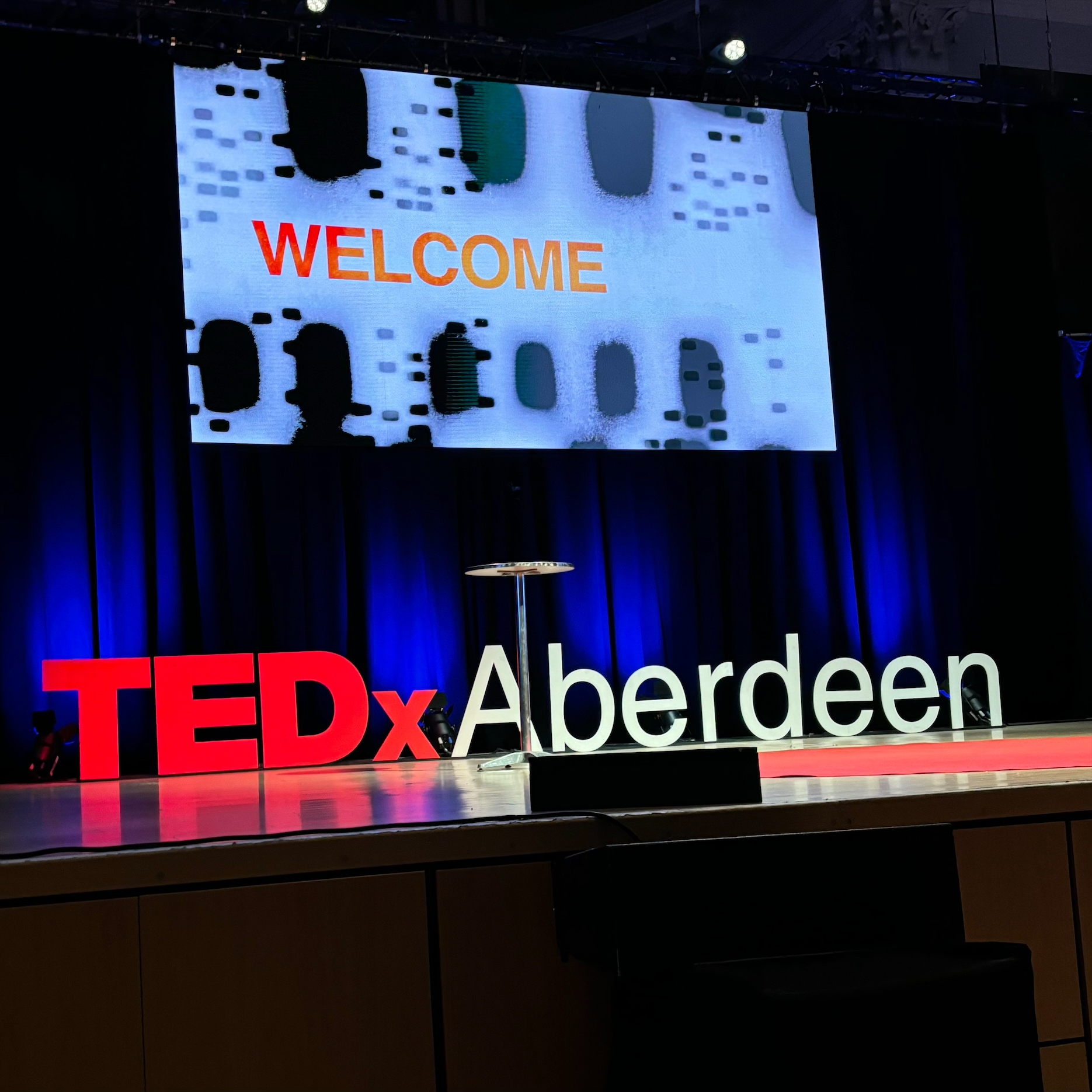
After a year-long hiatus, Aberdeen’s independent TEDx event has made a return, drawing hundreds of attendees to the Music Hall on Saturday. With talks centered around the theme of ‘Identity’, the highly anticipated event showcased ten speakers from across the Scottish North-East.
Two reporters from The Gaudie attended the day-long event of classic TED Talks, TED-Ed snippets, refreshments and entertainment.
TEDxAberdeen, a locally organised and TED-affiliated event, broke records this year after a significant change in its licensing terms. Previously limited to just 100 tickets, the event’s capacity tripled to accommodate the city’s demands.
This year’s success marks a significant difference from Aberdeen’s inaugural TEDx event in 2021, which was impacted by COVID-19 restrictions.
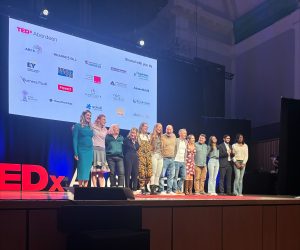
The hosts Moray Barber and Jill Simpson guided the audiences through the programme’s vast selection of speakers and spectacles, which were recorded to be published online.
From an initial pool of 97 applicants, ten speakers were vetted and trained by TV executive Derrick Thomson. A diverse array of TEDx talks explored the event’s theme of ‘identity’, with speakers covering topics from mental health and struggles with sexuality to the pursuit of perfectionism. The result was a dynamic program that left few aspects of the human experience unexplored.
This year, the focus was on personal experiences of the locally based speakers. While Chloe Watson shared relatable stories of recovering from a fast fashion ‘addiction’, Steve Beedie reflected on joining the military at 16. He also expanded on the moral challenges he faced when following orders meant neglecting the locals on Kosovo and Iraq deployments.
In a theatrical display featuring a real coffin, UoA religious studies researcher Dr Jennifer Riley delivered a deadly talk, encouraging audience members to select their grave goods to “give a material middle finger to the universe”.
Among the standout moments was a joint TED-Ed talk delivered by Aberdeenshire students Angel George, Aayan Ali Khan and Mirabel Obiekezie. The youthful trio offered a playful yet scientific perspective on the makeup of identity. In a comedically scripted debate, they argued whether identity stems from human biology, ascribed labels, or innovation. “The future is bright” exclaimed curator Derrick Thompson.
Magnus, 5th year Biomedical Sciences and Pharmacology student at Aberdeen University, was among the audience members inspired by the talks:
“It was fantastic. I will definitely go home and reflect on the talks for the next few weeks. There were lots of heavy topics with a fun twist, making me think about heavy subjects in a way that I hadn’t before. A few of them really hit home; a tear came to my eye with Steve Beedie and Martyn Hickin’s talks.”
Another audience member questioned if the selection of speakers was diverse enough.
The Gaudie asked Magnus what he would take away from TEDxAberdeen:
“One thing I would do differently is discuss some of these issues more openly. […] A lot of the speakers needed some sort of event, or push, to come out of their hole – to find their way to rediscover themselves. Perhaps I don’t need a large event like this to be forthcoming, to explore myself, and to be the person that I want to be.”
Moray Barber, head of EY Aberdeen and licensee of TEDxAberdeen, spoke to The Gaudie about this year’s theme of ‘Identity’:
“There was much to explore with this theme – how does identity impact a community? Does it hold it back or push it forward? What happens when identities are eroded?
As a long-standing fan of TED and TEDx talks, I am fascinated by how speakers take a broad theme and find a unique angle or fresh perspective to craft a compelling talk.”
After Birgit Itse’s story of settling into a new city as an ‘Aberd-Estonian’, Catriona Turner’s overcoming of her quarrel with being an ‘expat wife’, or Rose Owen leaving a cult; a somewhat cliché but impactful message stood resounding: be yourself.
The TEDxAberdeen talks were recorded and will be published online.