
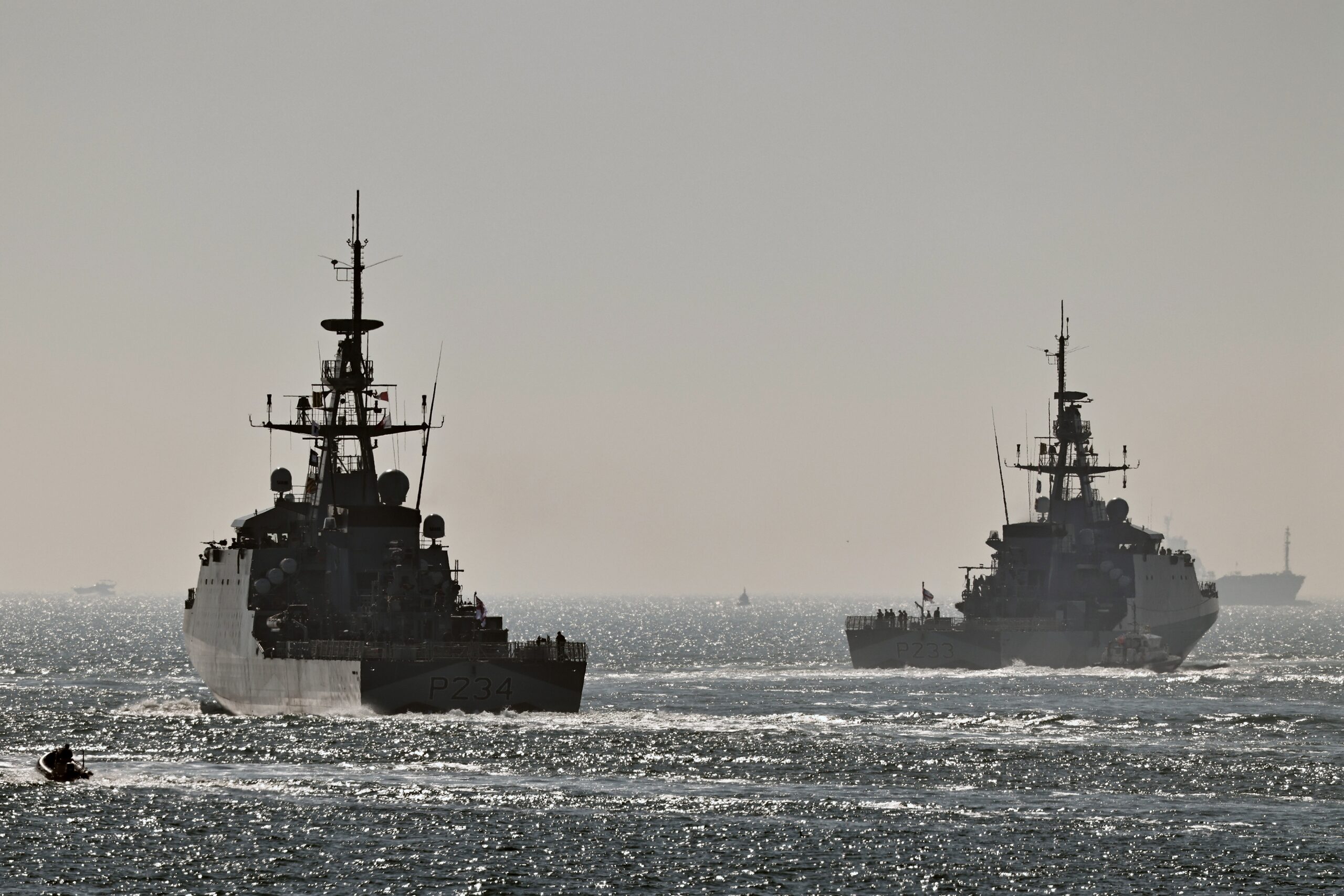
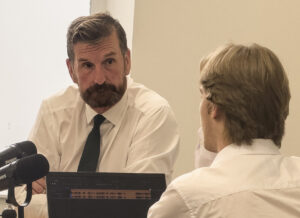
If a second referendum on independence is achieved, how could Scotland defend itself? This is what The Gaudie asked the SNP Westminster Leader Dave Doogan during an exclusive interview.
Doogan told The Gaudie that “the first obligation of the state is to defend the people of the realm” and that independence would allow Scotland to invest in defence equipment more suited to protect Scotland rather than what he described as delivering “strategic depth to the rest of the UK.”
The Scottish Government paper 2024’s Building a New Scotland: An Independent Scotland’s Place in the World, the priorities of a Scottish defence force would be “securing Scotland’s borders, land, airspace and sea, deterring attacks and protecting our citizens and assets from threats.” In addition, Scotland would contribute to international alliances such as NATO. Doogan told The Gaudie “Scotland has a proud martial tradition. We are not culturally or historically known to shrink from the defence of our values”.
Scottish Defence Industry
Under an Independent Scotland, defence would benefit from the existing defence industries including shipyards and radar technology. Supporting these industries, Scotland would follow a similar model to Norway, Sweden, Finland and Denmark, which embrace their domestic manufacturing for certain products where the expertise is already mature, but without stretching to covering all bases. Dave Doogan described the effort to create an “economic dividend” which would enable Scottish industries to export equipment, boosting Scotland’s economy while supporting jobs.
In Building a New Scotland: An Independent Scotland’s Place in the World, the commitment is made to meet NATO’s recommended percent of GDP expenditure on defence, which at the time of publication was 2%. The Gaudie asked Dave Doogan if an Independent Scotland would align its spending with NATO’s more recent targets. In response, the minister said that “an Independent Scotland would seek to”, but defence spending would have to be balanced with other government departments that would require investment. Doogan did criticise the UK Government for spending less money on defence in Scotland than in the south-west of England, stating investment in Scotland should be “far higher than it is.”
Defence Relationships
Doogan also confirmed that an Independent Scotland would apply to join NATO, arguing that Scotland’s geography would make the country a valued member of the alliance. He also made the case that the SNP’s policy on nuclear weapons would not prevent Scotland from joining NATO, as many current NATO members do not own nuclear weapons nor are part of the United States’ sharing arrangements. In addition to NATO, Dave Doogan also told us Scotland “would be an excellent fit” for the Joint Expeditionary Force – the UK-led defence arrangement with Northern Europe designed to complement NATO.
An Independent Scotland would cooperate closely with the United Kingdom and Republic of Ireland on defence, as currently happens with Ireland from within the UK. Dave Doogan explained that after independence “we would be seeing a lot of the same challenges”, arguing that “there will be a far stronger union after independence” and that Scotland would work to “enthusiastically and stridently co-produce some sort of military effect” with the UK and Republic of Ireland. Doogan also clarified that military forces from the UK “probably would” be hosted by Scotland after Independence due to the Joint Expeditionary Force.
The 2024 paper also mentions Scotland would join international peacekeeping missions with the United Nations and join the European Union’s Common Security and Defence Policy, which would form the “second key component of defence” after NATO.
Policy on Nuclear
As is well established, the UK’s nuclear weapons would be removed from Scotland after independence, and Dave Doogan confirmed this remains SNP policy despite a more contested world. However, when questioned about whether an Independent Scotland could host an ally’s nuclear weapons on a short-term basis in the future, he answered “that would be a decision for a future Government of Scotland.”
Force Structure
Under current plans, the new Scottish Government would complete a Defence and Security Review before Independence Day which would dictate what equipment and force structure would be required to defend Scotland’s people, territory and interests. Comparator nations mentioned in the 2024 paper include Ireland, Norway, Denmark, Finland and Sweden.
Dave Doogan told us that Scotland currently pays for 8% of the UK’s defence budget, which if taken as the Scottish defence budget, would be “a very chunky budget.” This would allow an Independent Scotland to maintain the current military bases at Faslane and Lossiemouth, but also fill in the part of defence not currently present in Scotland such as medical, estates and procurement.
Since 2013, Scottish Government papers have planned that Faslane would be used as the main base for a Scottish Joint Force Headquarters. The composition of Scotland’s Armed Forces after Independence would be determined by the Defence and Security Review after Independence, however Dave Doogan did make the case that both the UK and Scotland should “learn the lessons from Ukraine” in the use of drones on the battlefield.
Building Capability
In our interview, Dave Doogan made the case that a “tapering” transition for Scotland’s defence would be more suitable in the divestment arrangement for Independence rather than a “clean break”. He anticipated that it would take longer than 3 years to generate Scotland’s defence capabilities but that Scotland would be “in a comparably satisfactory position” not long afterwards. The minister also explained that Scotland may be entitled to take 8% of equity of the UK’s military equipment, but that it wouldn’t help the collective defence of Scotland, Ireland and the UK to take from existing programmes such as the Type 26 Frigates.
The 2013 Scotland’s Future paper described the first five years after independence would see Scotland build the forces to meet its national defence needs, with forces to roughly double after a decade of independence to support international commitments including NATO. He went on to highlight that there are “defence professionals who might like the blank canvas we would have in Scotland to generate the right system for the right reason to generate the right effect.”