
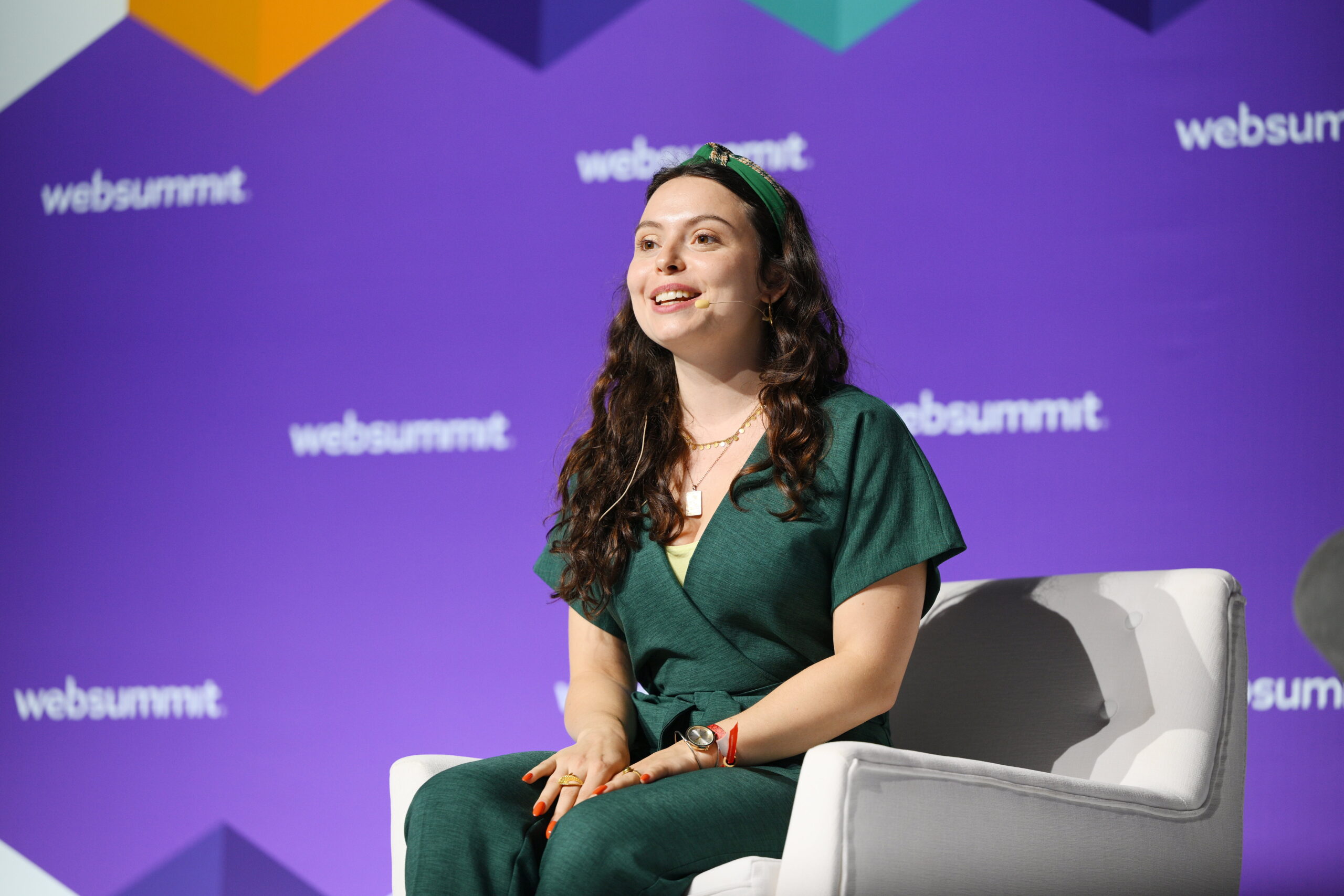
Sophina, an AI assistant developed by journalist and influencer Sophia Smith Galer, claims to give journalists a headstart on making viral vertical video content.
The AI, which has been trained on a dataset of 100 successful videos from Galer’s own TikTok, takes your existing script and spits out a new script that has been optimised to go viral.
The concept behind Sophina and how it was developed, as a large language model (LLM) trained on Galer’s content, relies on the idea of ‘algorithmic storytelling’.
Essentially, scripts optimised to go viral make the video content compelling and easily digestible for a wide and varied audience.
If you have spent any prolonged amount of time on a vertical video platform, you have probably noticed that outside of general memery videos have a formula – an evidently successful formula.
You know the type of content, short, eye-catching and enough to make you stop scrolling and watch – at least briefly.
Galer cites the motivation behind creating Sophina was for low-resource newsrooms, journalists and experts to be able to counter disinformation online. Access to the chatbot is subscription-based, with Galer claiming that every Sophina subscription helps ‘pay towards a free subscription for a fact-checker’ to help ‘defend the internet against disinformation.’
Whilst Galer’s intentions with Sophina are certainly altruistic, I have to question how regulated access to a tool like this is. If Sophina really is capable of creating compelling, viral content – then what is to stop purveyors of disinformation using it to create equally viral content?
At the time of writing, the Sophina subscription is on pause for beta testing although the answer seems apparent. On the website, Galer contends that ‘everyone should be able to make content’ which means that if you have £10 a month in your pocket for the subscription, you too could be a viral sensation.
One of the major arguments against the use of AI tools, particularly those that fall into the arts sphere i.e. the AI generation of art, images, videos etc, is how ethical – or rather unethical – it is.
These AI generators are trained on huge datasets, typically billions of images, and the work included in these datasets can often be copyrighted. This means that artists’ work is being used without their permission to potentially generate work in their style, without crediting them.
However, Galer claims that Sophina helps you go virally ‘ethically’ as the material the AI was trained on (transcripts from Sophia’s content) was shared consensually.
Galer’s efforts to support the production and sharing of accurate information in what she calls an ‘emerging information landscape’ – to the widest audience possible – in an ethical manner, has to be commended.
Her work on Sophina was recently recognised by Women in Journalism, who nominated the AI for the Georgina Henry Award for Digital Innovation.
Galer clearly intends for the AI to be a tool for good, ‘to make the internet a better place,’ but it all feels a little shortsighted to me.
For one, anyone can access the tool. Secondly, Sophina only helps you emulate one style of viral content – Sophia’s. And lastly, if everyone can access Sophina, anyone has the ability to potentially make money using the tool.