
by Fred Byrne & Oliver Kennedy.
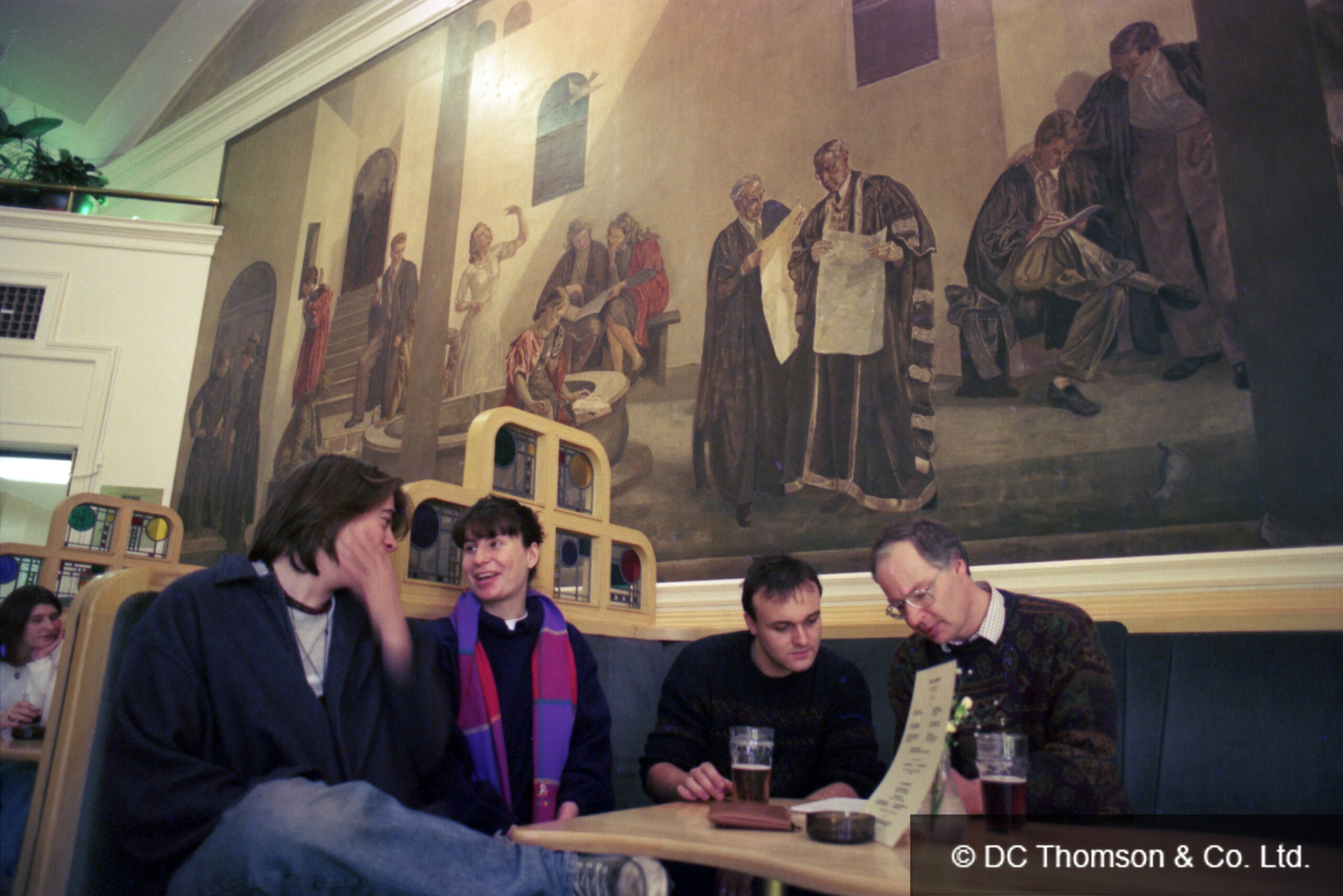
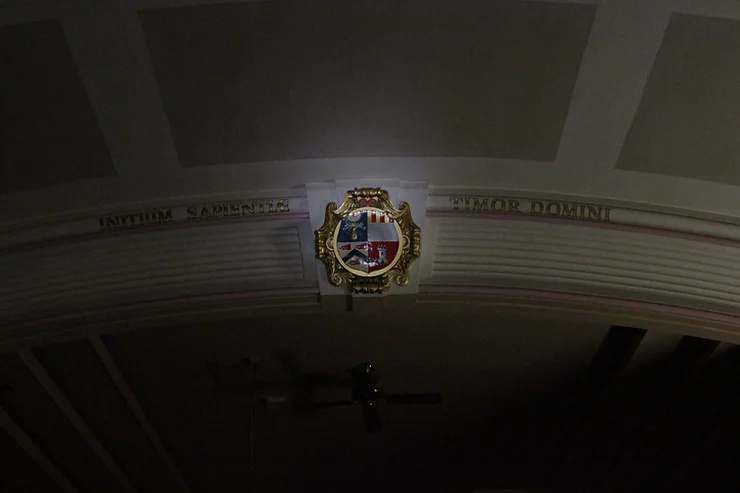
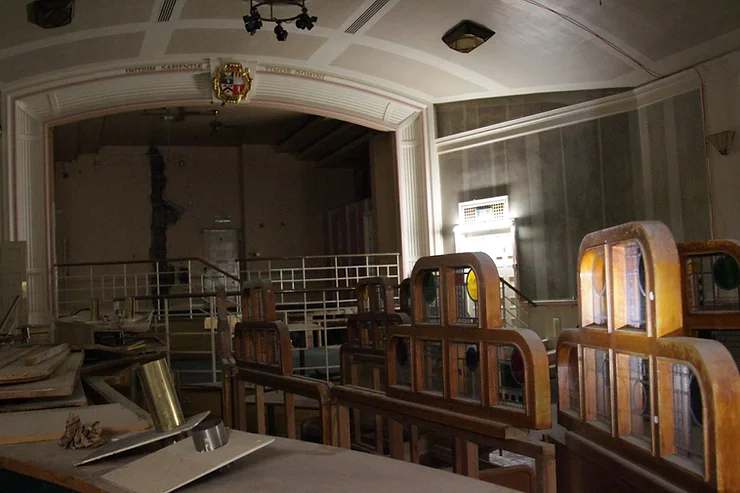
Unknown to most current students, the old Aberdeen University’s Student Union is located at the top of Upperkirkgate in the centre of Aberdeen, which holds one of the most important collections of murals created in 20th century Scotland. Constructed in the 1930s at a cost of £34,000, the union opened in 1939 and marked the first time men and women shared a union anywhere in the country.
With capacity for 2,000 people across six bars and a cafetaria, the union also held frequent discos and dances, becoming a lively hub for students who attended classes in the adjacent Marischal College. To decorate the walls of the four-story complex, the union commissioned Robert Sivell of the Royal Scottish Academy (RSA), Head of Drawing and Painting at Grays School of Art, leaving him with free reign to create what he felt would resonate with students most.
Over a 15-year period, elongated by WWII, Sivell and his most talented students created several murals covering 1,300 square feet of wallspace in different areas of the union. In a letter to the university confirming the completion of the murals, Sivell described his paintings as the “interpretation of the adventure of life and learning as presented to the imagination of the student entering his career.”
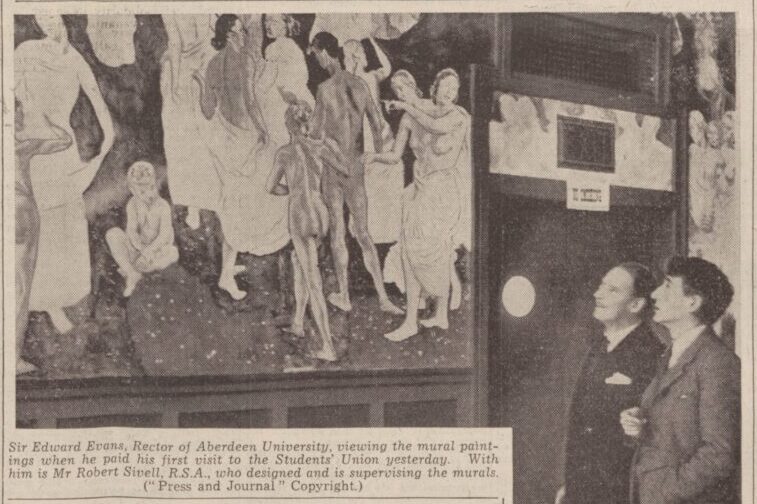
Upon completion in 1953, Sivell presented the murals to the students and local press and they were accepted with wide acclaim. In 1960 Sir W. O. Hutchison, then President of the RSA said: “The decoration of the hall is without doubt the greatest mural painting carried out in Scotland during this century and perhaps any other”. For the following 51 years, the murals served as an ever-present backdrop in the union, which in 2001 won ‘Best Students Union in the UK’. In 2004 its doors permanently shut after all teaching was moved to the Old Aberdeen campus.
Preserved behind protective sheets for the past 20 years, the murals have been inaccessible to the public and forgotten by many at the university. Now owned by Bon Accord shopping centre, the murals are at risk of dilapidation or even destruction, prompting the foundation of the Friends of the Sivell Murals, Aberdeen (FOSMA). Founded in 2024 and chaired by Dr Marion White, the group intends to raise awareness of the murals, preserve them, and lobby for public viewing access.


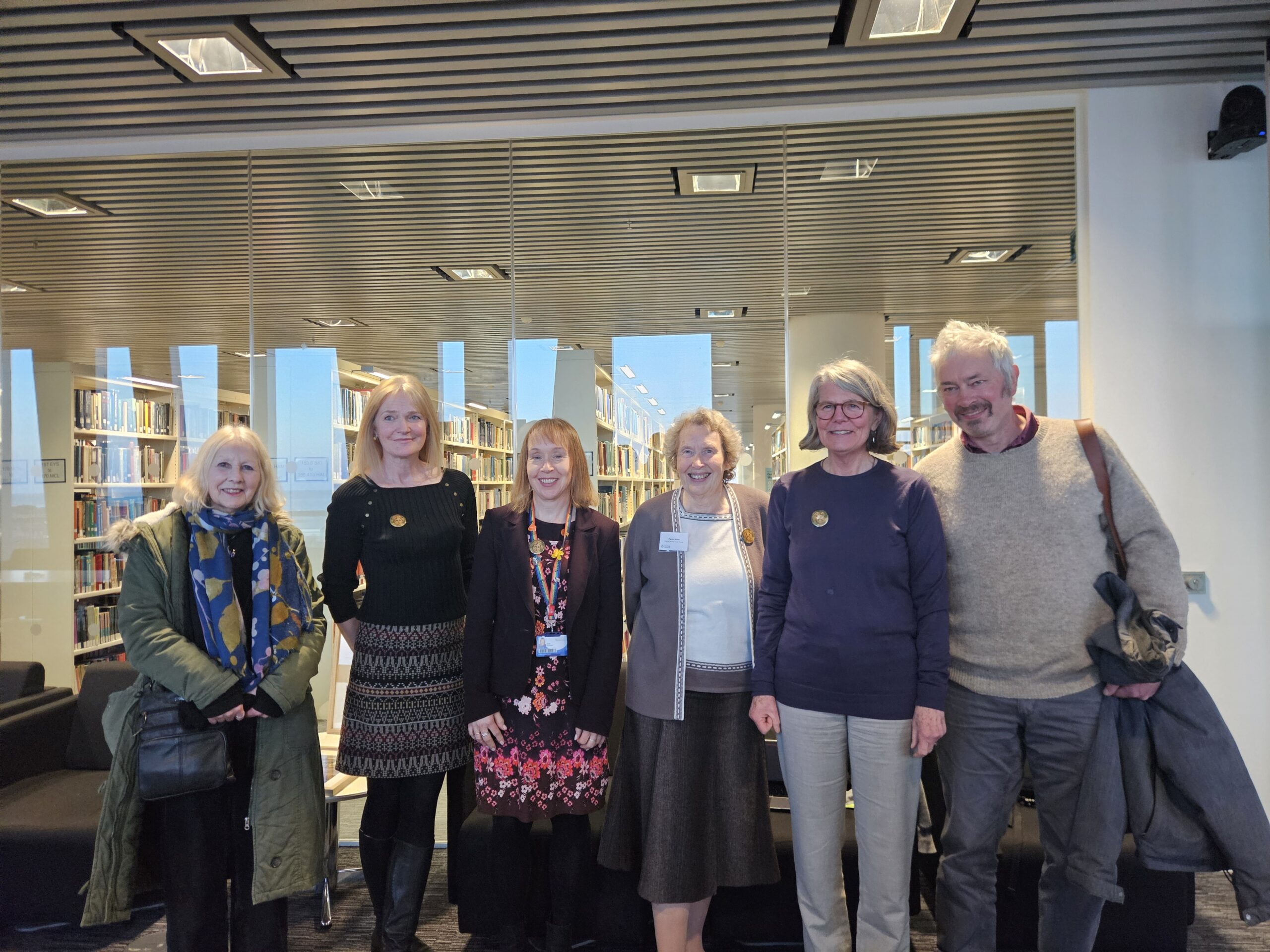
In an event launching the Friends of Sivell Murals at the Sir Duncan Rice Library in early November, Dr White introduced Dr Mary Pryor, former Head of History of Art at Aberdeen University. She shared the story of the Sivell Murals with Aberdeen alumni, local councillors, and The Gaudie. Dr Pryor developed an affinity for the Sivell Murals through researching for a PhD in art collections, and has worked to preserve the story of the paintings.
Dr Pyor spoke about the artistic value of the murals, and how various panels depict aspects of university life from the pastoral lives of students, to devastation and hope in WWII in which medical students at Marischal College played a role. In the so-called academic panel, lecturers are depicted in academic robes – an outfit which was once the norm. Teamwork and leisure are also inspirations for the artwork, with ‘The Grape Harvest’ and ‘Pastoral Panel’ depicting achievement and relaxation respectively. Female characters are at the centre of each mural, suggesting a shift from the previously male dominated student society at the time.
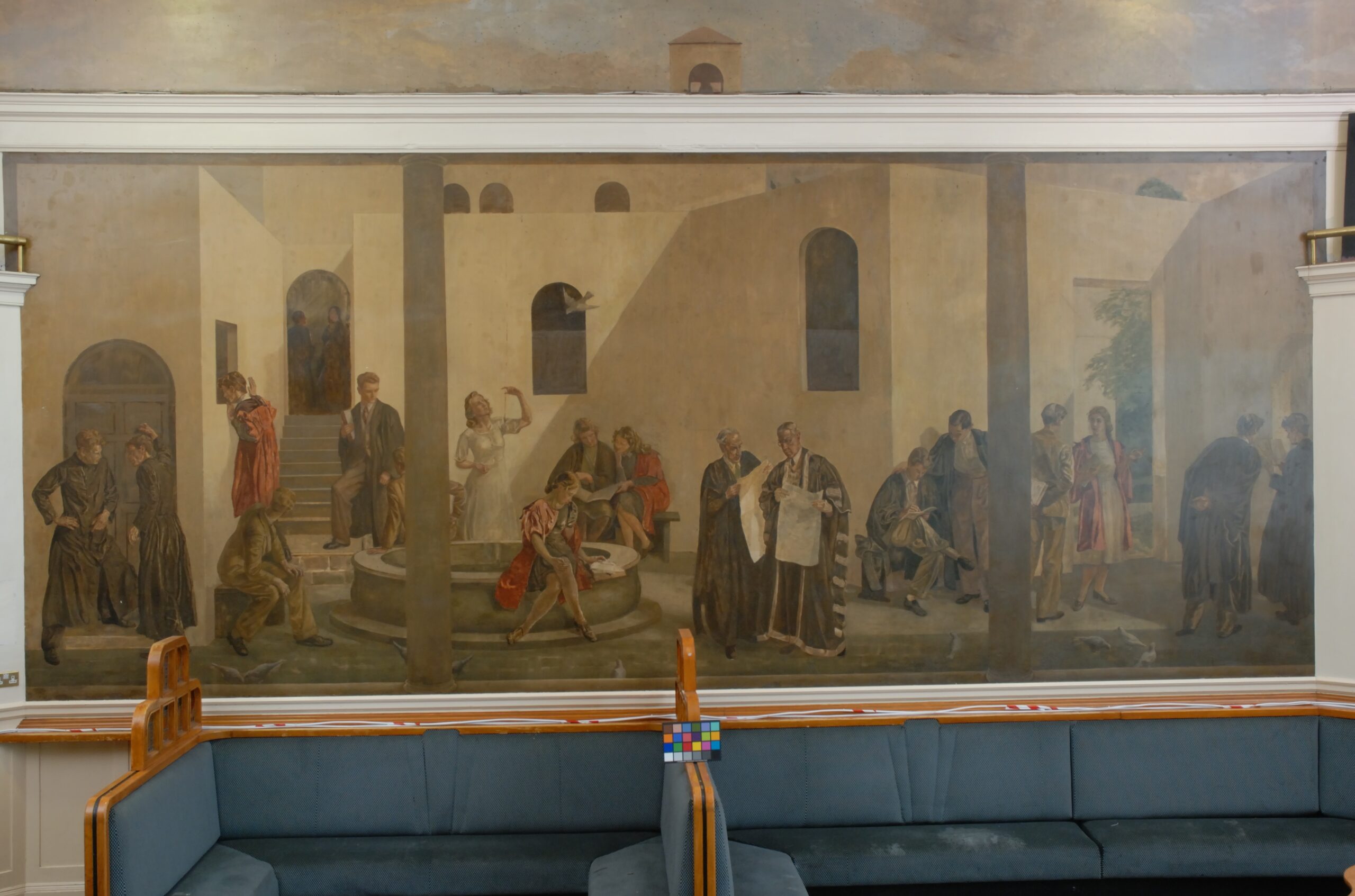
The collaboration between staff and students in painting the murals is a good reason to celebrate the art. Robert Sivell worked closely with two of his most talented students, Alberto Morrocco RSA and Gordon S. Cameron RSA, to help him create the works. Dr Mary Pryor is current Senior Academic Skills Adviser at the University of Aberdeen, where today close staff-student partnership is seen as essential to a quality academic experience.
And so, Dr Mary Pryor and Dr Marion White work closely to emphasise the importance of this neglected art.
The Gaudie was an “absolutely invaluable” resource for researching the murals, shared Dr White. Searching through our 91 years of editions, she found the archives to be a “fascinating” flavour of student life and societal change through the years.
Our newspaper last published information on the old Students’ Union in 2019 when student reporters undertook an ‘expedition’ there. They said, “As our eyes adjusted to the dark hall, […] it wasn’t too hard to reimagine the reckless abandon and cathartic expression that the Union provided for its student body; the smell of alcohol seemed to still linger in the air, on the carpets and floorboards, consuming much of the open space at Sivell’s Bar [named after the artist] which operated in the largest, mural-covered hall at the back of the Union.”
At the FOSMA event, audience members asked questions about the mission of the organisation, to which Dr White responded with uncertainty about long term objectives. Perhaps they could become a charity, she shared. However, general consensus had it that public awareness is key to the goals of preserving and making accessible the forgotten Sivell Murals.
Julia Stricken, who is secretary of FOSMA, has drawn on her experience in the Friends of St Fitticks Park, a campaign which aims to protect an Aberdeen green space from being used in an energy project. She sees both campaigns – for St Fitticks Park and for the Sivell Murals – as fights for the cultural preservation of Aberdeen against larger economic forces. She agreed that public buy-in is essential, and sees students as important in the equation.
Conrad Funk, a fourth year student of History, undertook a summer internship for FOSMA collecting data on the artists alongside Morrocco and Cameron who supported Sivell in the creation of the murals. Conrad works part-time as a tour guide in the city, and the ex-Students’ Union building is a stop on his tour route. It is a particularly sobering moment on his tours when he must explain why the fascinating murals cannot be admired in person.

Conrad shared: “My work with FOSMA was enlightening and gave me an appreciation for local history that is often easy to overlook, even as a history student. Marion’s unwavering dedication proved infectious. I hope to one day see the murals as one of the key components in Aberdeen’s steadily growing tourism effort, given its importance as a key site of local art history. I would just like to be able to see them with my own eyes given the 70 hours of research I have dedicated towards them.”
Kathryn Berry, studying in Aberdeen for a PhD in History, was also a FOSMA intern, conducting archival research at Aberdeen Central Library last year.

She said: “I was struck by how unique these artworks are within Aberdeen’s vibrant mural culture. I hope the space can be reopened so that both students and the wider public can explore this aspect of the University’s history and the stories of Aberdeen that the murals themselves tell.”