
Bread and Roses is a 2023 documentary focusing on the lives of three women under the increasingly oppressive Taliban regime. It was co-produced by Academy Award-winning actress Jennifer Lawrence and activist Malala Yousafzai, who was shot by the Taliban on her way to school in 2013.
The film is named after the suffragette slogan coined in a speech by American activist Helen Todd. The slogan has resonated within feminist spheres for decades and was even used in a 2019 protest in London. Today, the increasingly volatile environment for women in Afghanistan is at the forefront of feminist concerns.
For women in Afghanistan, their oppression is stark and silent.
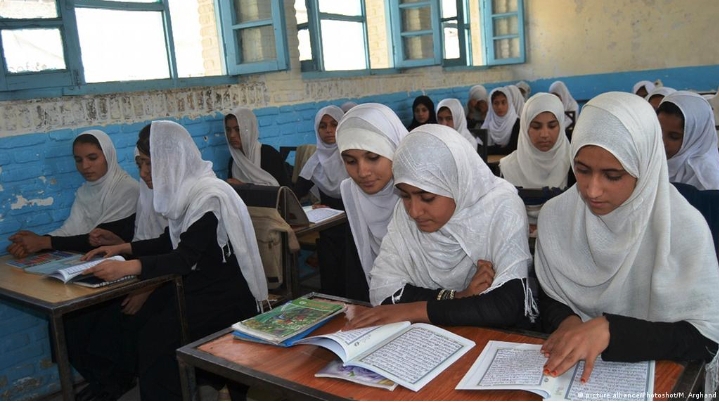
The documentary centres on the oppression women are facing within societal structures under the Taliban. For women in Afghanistan, their oppression is stark and silent. At the time of filming, the women in the documentary were banned from working and learning, with many universities being closed. Since the release of this documentary, women are now banned from speaking in public or speaking to another woman.
The documentary follows three women and their battle for autonomy and resistance.
Sharifa is an ex-government employee who longs to join the resistance being displayed and led by the women within Kabul. However, she is confined to her house due to Taliban rule. In the first scenes, we follow her to her rooftop where she hangs her washing. She states, “Coming to the rooftop to look around is a sad solution for my longings.”
She expresses her longing for the things she had and the freedom she has lost. In a truly devastating sequence, she poses smiling for the cameras, repeatedly asking them to take pictures of her. It is a heartbreaking attempt to be seen and immortalised. As part of the Taliban government’s ‘Vice and Virtue laws,’ the photographing and recording of “living beings” has been prohibited.
Later in the film, we see her filming a video with members of her family to promote the social media hashtag “#StandWithWomeninAfghanistan.” This is a hashtag that encapsulates a global movement of activists calling for solidarity with Afghan women and a call for international governments to do all they can to end the Taliban regime.
This movement is where supporters should focus: giving Afghan women the voice that has been taken from them. Sharifa’s mother tells her, “I can’t sleep at night; I am completely worried about you.” This conversation highlights the fear and inability many women feel to fight for their rights – with the consequences leading to death.
At the end of the documentary, Sharifa cries to her camera with “only a pen and a book are the companions” for her “lonely moments.” She reiterates again how much she misses her life before the regime, missing things as simple as women being able to wear colourful clothing. Since being back in power, the Taliban has implemented a black hijab mandate and restricted coloured clothing for women.
The second woman followed during the documentary is Taranom. She organised and participated in protests and, as a result, is forced to flee the country and seek refuge in Pakistan. Pakistan has been an unwavering support for Afghan refugees, with villages being set up to house the displaced and persecuted. Approximately 3.1 million people have sought refuge in these camps.
…she had no choice but to leave them.
In a compelling moment, she expresses to the camera she is most devastated at the loss of her homeland. Her family stayed in Kabul, and she had no choice but to leave them. She states what pains her most is “the pain of your family being in the hands of the most depraved people on earth.”
Much of Taranom’s footage is intercut with videos of protest filmed by women. In much of the grainy footage, we see groups of women with placards screaming for justice only to be met with tear gas and violence from the Taliban. In one video, a woman is arrested and told she will be killed if she doesn’t stop talking. Despite this, she stays defiant and even berates the man, stating, “Then kill me, you closed universities and schools, you might as well kill me.” According to a report, there have been 840 cases of gender-based violence since 2022, with over half of these being committed by Taliban officials.
“Then kill me, you closed universities and schools, you might as well kill me.”
By the end of the documentary, Taranom announces Pakistani officials have kicked them out of the safe house. She has no money, and her visa appointment has been cancelled five times. She has nowhere to go.
The final woman to be documented is Zahra, a dentist who organises protests and activism through her former practice. Zahra acknowledges the systemic patriarchal oppression being formed in Afghanistan, stating, “The Afghan woman is first oppressed at home.” Since the Taliban took Kabul in 2021, there have been 332 reported cases of femicide.
She films a meeting with fellow activists. They share speeches addressing the misconceptions of women protest groups within the country. They are advocating for civil revolution and a recognition of the importance of women within it. One woman, the writer in the group, expresses her wants for a library filled with books and history written by women. When a member of the group confesses she is being beaten by her husband, she tearfully states, “I am only human, how much more can I suffer,” and “I cry for freedom for all women as I myself am tortured.”
“I cry for freedom of all women as I myself am tortured.”
Zahra is arrested, protesting along with seven other women. She is later freed, but two of the other protesters were kept in, both beaten extensively. She cannot bear the thought of having to flee her home and leave her fiancé and decides to leave the movement instead.
In a devastating ending, it is revealed that Dr. Zahra Mohammadi was kidnapped outside her practice. She was kidnapped by the Taliban, who viewed her vocal activism as a threat. She was held for days and endured psychological torture. After being released, she finally fled the country, and her location has gone mostly unknown since.
The documentary shows the devastatingly real microcosm of the experience Afghan women are facing. It depicts the cruel and regimental stripping of their rights and autonomy under Taliban rule.