

On September 7th, 2025, an awe-inspiring total lunar eclipse graced the skies, visible across Europe, Asia, Australia, Africa, the West America, East South America, the Pacific, the Atlantic, the Indian Ocean, the Arctic and Antarctica. Total lunar eclipses, such as this one, are a rare phenomenon, occurring only once every 2.5 years. During this event, the moon is submerged in the Earth’s shadow, which causes the beautiful moon to glow red as sunlight gets scattered, leaving only red and orange wavelengths to reach the moon; this phenomenon is called Rayleigh scattering. There are different types of lunar eclipses besides the total; there are also partial lunar eclipses (where only a part of the Moon enters Earth’s shadow) and penumbral lunar eclipses (where only Earth’s outer shadow falls on the Moon).
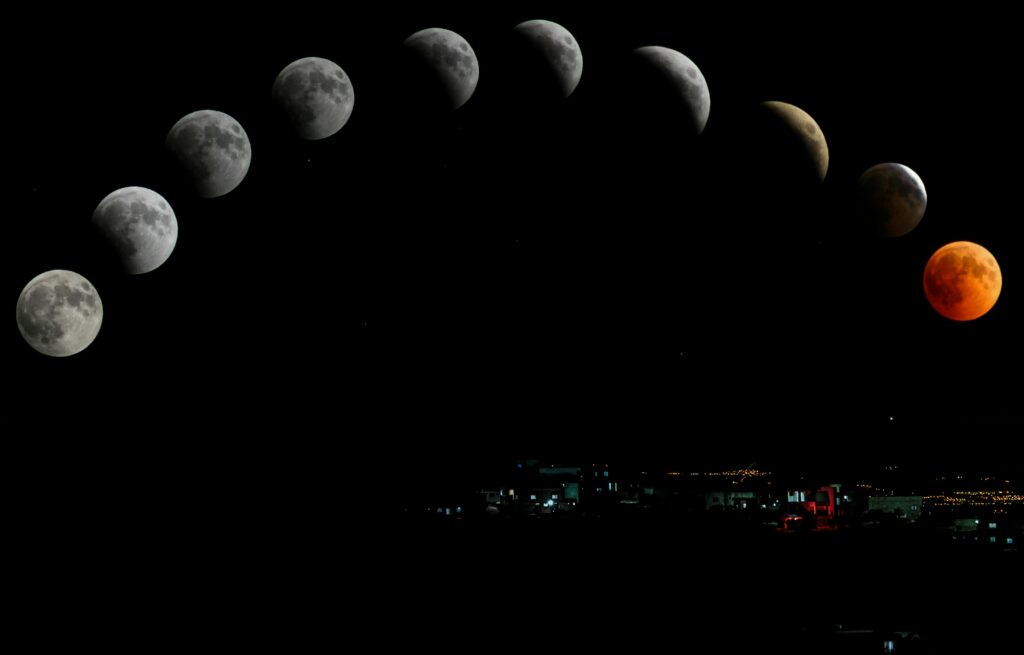
The blood moon lasted approximately 82 minutes, providing gazers ample time to catch a glimpse of this spectacular view. Blood moons, with their rich history of myths and cultural significance, are viewed by some as an omen, while others celebrate them as a celestial renewal.

Currently, our home is unique as Earth is the only planet that can perform a total lunar eclipse (when it covers its moon fully); however, one day this alignment will no longer come to pass. The moon is slowly moving away from the Earth, at about 4 cm per year, which is decreasing its angular diameter, making it unable to cover the Earth’s shadow. Even though this process will take millions of years, it does mean that total lunar eclipses are not a forever phenomenon.
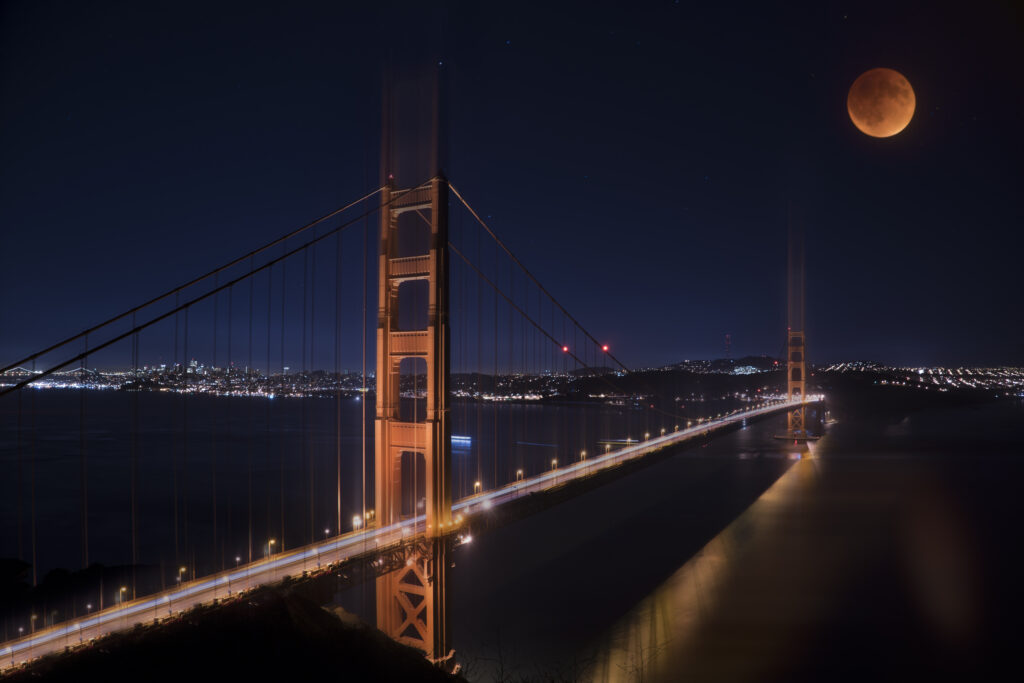
If you missed this show, don’t worry! The next lunar eclipse is just around the corner, expected to grace our skies on March 2nd – 3rd, 2026. Be sure to mark your calendars for this upcoming celestial event!