

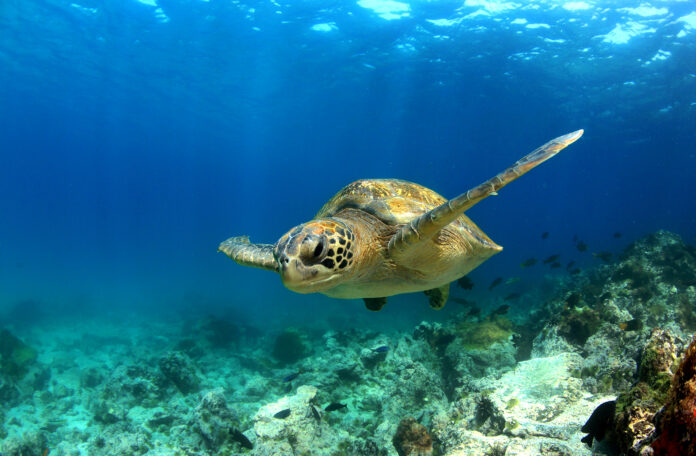
Like many South American countries, Ecuador, which has a world-leading constitutional ‘Right of Nature’, supports its small-scale fisheries in an eight nautical mile Zone for Artisanal Fishing with the Organic Law for the Development of Aquaculture and Fisheries, in an effort to increase the development of sustainable practices and socioeconomic equity. In 2020, industrial fishers brought a lawsuit before the Constitutional Court, claiming that Article 104 of that law was unconstitutional, as it led to overfishing by small-scale fishers. They also argued that the eight nautical mile zone violated their rights to benefit from nature. The Constitutional Court of Ecuador rejected the argument, establishing the necessity of the Zone for Artisanal Fishing to protect local fish species and their ecosystems, and in a landmark decision, granted legal rights to their national marine ecosystems.
Rights of Nature are still a nascent idea, but with growing global representation. More than 500 laws and policies have been passed around the globe, often in connection with facilitating Indigenous governance. The concept assigns people the legal capability to speak out for and represent natural bodies, which have intrinsic rights to exist and thrive, similar to the framework of Human Rights. One of the most well-known examples included New Zealand granting legal personhood to the Whanganui River in 2017, which enabled the creation of legal bodies representing the interests of the river and managing a National Park in its interest. Similarly, Panama assigned personhood to sea turtles in 2023, which gives the animals inherent rights, including the right to live and have free passage in a healthy environment. Most recently, the river Ouse in Sussex became the first natural entity to be granted legal rights in the UK this spring. With the river now enjoying the rights to flow, thrive, and be free from pollution, other river rights initiatives are being established around the UK.
In this positive global development to legally acknowledge the value of our environment, Ecuador was the first, and so far only, country in the world to establish statutory Rights of Nature when it signed the rights of Earth goddess Pacha Mama into the constitution. This included the right to restoration, the legal necessity of precautionary principles and made lawful restrictions against people harming or destroying ecosystems possible. According to the UN, the Right of Nature framework introduced a number of ecocentric legal principles, including the “principle of precaution, prevention, in dubio pro natura, non regression, [and] tolerance, among others which have been key to stopping development projects threatening the integrity of Nature and preserving biodiversity under an ecosystemic oriented governance.”
Now, for the first time, marine ecosystems are included in a Rights of Nature framework, establishing a global legal precedent where people have the universal right to sue on behalf of marine habitats. Previous court decisions in Ecuador concerning the Rights of Nature were only centred around terrestrial environments. The Constitutional Court ruled that marine ecosystems “have the right to maintain their natural life cycles, structure, functions, and evolutionary processes”, highlighting the intrinsic value of these environments. The ruling requires the government to review regulations and take sufficient protective measures to safeguard the environmental functions of the coastal marine areas.
The Ecuadorian case demonstrates the value of Rights of Nature frameworks and shows that they hold up legally against misuse and misinterpretation. This lawsuit, which was initially intended to loosen access restrictions on the large-scale fishing industry, backfired for the companies and reinforced protective measures and artisanal livelihoods. The Constitutional Court explained its decision with scientific evidence showing how the protected zones enhance population growth, and emphasised that protecting nature inherently means protecting human communities. With this, the case provides a trailblazing example of how conservation, science, policy and community interests can work hand in hand. The ruling also sets a strong statement ahead of the third United Nations Conference on the Ocean, which took place from the 9th to the 13th June in Nice and was a decisive event for the future of marine conservation.
