

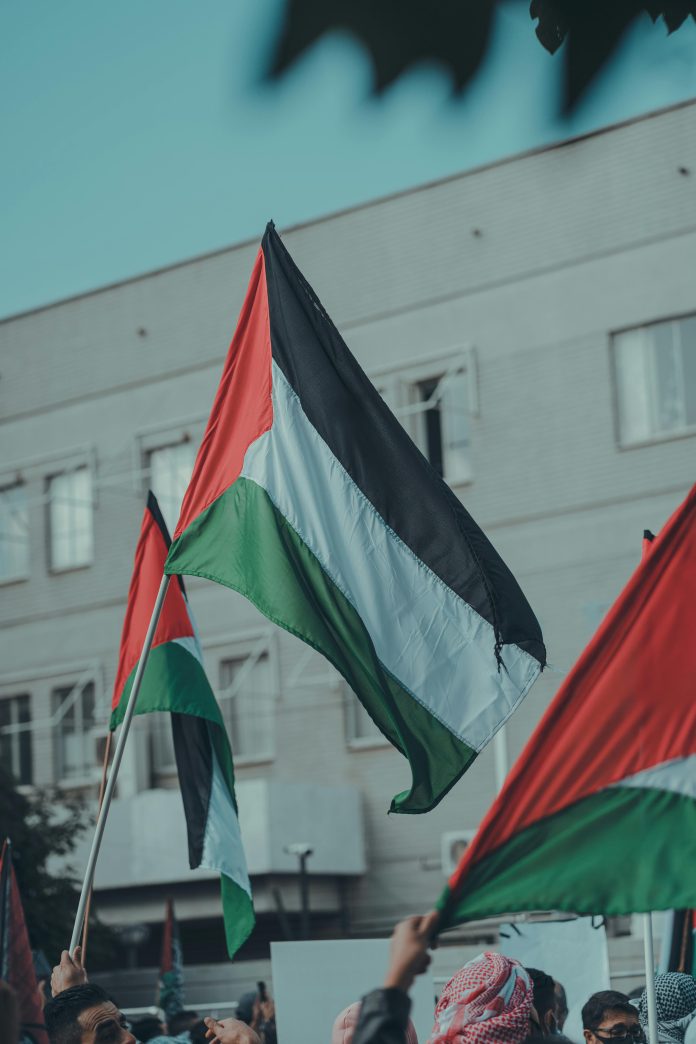
Censorship has always been a powerful weapon for governments and other similar bodies of authority to control the information that is being spread amongst their territories. We have seen time and time again that media and the ability to spread information – especially during times of war and contention- can often change the hearts of nations. Information, and the spreading thereof, is in itself a weapon. It was the lack of censorship during Vietnam that lost America the war, just as it was the use of censorship during South Africa’s apartheid that further oppressed the people. It is powerful and it is effective in keeping an often-distorted version of peace. We are seeing it again in real time. The acts against Palestinians are becoming a stain on British and other Western power’s histories.
The atrocities that are being committed everyday are increasingly becoming rampant in a world where information is easier than ever to spread and misinform. Baseless arguments and falsified facts are an easy trap for the average scrolling addict – the lack of critical thinking to cite sources means it is easy to just take this at face value. This further creates a snowballing effect in which misinterpretations and prejudices are created. Misinformation leads to hatred. The trust we have in people we see on the internet needs to be taken with a pinch of salt. Just because these people are famous or attractive does not make them right. Social media has become a weapon of mass destruction as a consequence of this; the overload of content making it easier to distract and desensitise. There is a narrative attempting to be written by people that are biased, privileged, and safe away from the conflict, and it is vital for them that this narrative is the one to be put forward.
This narrative is further encouraged by Western governments. The right to the freedom of speech and expression is being threatened for anyone who does not conform to the government’s ideology. You may think I am being dramatic however, when the phrase “from the river to the sea” (a common phrase used in discussion of Palestinian liberation), is being criticized as hate speech and protestors are being rebranded as “extremists”; it is clear that Western governments, especially the UK, are stirring the idea that Palestinian oppression is a good thing. This genocide directly benefits them. Human life becomes disposable when there is the possibility for financial gain.
So how does this apply to the University of Aberdeen? It is no secret that the University’s stance on the Palestinian conflict is a hard one to define, which is simply unacceptable for the time that we live in. What furthers the disappointment in our school is the censorship of the “Mandla Mandela” event. Palestinian Solidarity Society (PSS) had arranged an educational and peaceful talk hosted by Zwelivelile ‘Mandla’ Mandela – the grandson of one the most influential peacemakers of our time. This event was to discuss the South African apartheid and the lessons we can take from this time.
On Friday 11th October, this event was cancelled and blocked by the University just days before the event. It is, in shared words of Palestine Solidarity Society, Black Asian Minority Ethnic Forum, and Debate Society, “an unparalleled level of suppression from the University.” The University must have a standard to hold themselves too, regardless of political ideas aligning. It is also important to note that this event that was banned during Black History Month – a month to push yourself to do better. A month in which Black voices are so important to listen and learn from. The apartheid in South Africa is relevant to both Black History Month and Palestine and is probably the most vital case study when analysing oppression. It just does not make sense to block this event. The Palestine-Israel conflict is not an easy topic, it is not a light-hearted, easy to brush off topic, it is genocide. Censorship is complicity. It is also weak. It is a poor representation of the students that attend this University. Regardless of what side of the conflict students are on, we must be able to listen to one another and hear each out. We do not and will not silence each other.
Censorship is becoming more common, and less obvious, spreading throughout the government, social media and now an institution that claims it supports the right to education. It demonstrates the effort this University will go to feed into the imaginary narrative. It is atrocious, it is disgusting, and it is embarrassing. PSS managed to reform the event, and it still took place on Monday 14th October, now as a protest against the University’s suppression, where Mandela was still able to speak. Students gathered on Elphinstone Lawn to listen to the speech that streamed online. The talk was peaceful and educational, it allowed students to get an insight into what apartheid really looks like. It also gave students an opportunity to use their voices in the wake of attempted suppression. This talk was so influential for this University, it highlights to us the community that has been forged out of this tragedy. Palestine is a force to be reckoned with, and the perseverance of the students here proves that.
Importantly, it also allowed for students to see where protests get them! Protests and movements are important, they make change. The end of South African apartheid highlights this. There is hope, and protests are not done in vain. Be proud of what your voice stands for because it means something.
The right for free speech is more important than ever. Our voices are important, they are powerful, and they are necessary. The University and the Government can try, but Palestine will not be silenced.
Free Palestine.
