

Are you a woman with strong opinions on political or cultural issues? Do you have noticeable scars, moles, or disabilities that your community might notice? Have you ever witnessed an unfortunate event or a natural disaster? If you answered yes to any of these questions, you should feel relieved to be living in 21st-century Scotland. For 173 years, such traits would have branded you a criminal under the Witchcraft Act, and you could have faced the same fate as the 2,500 victims executed, often by being burnt at the stake.
Self-proclaimed Quarrelsome Dames, Claire Mitchell and Dr Zoe Venditozzi, known together as the Witches of Scotland, have tirelessly campaigned to honour the victims of this dark chapter in history, particularly as it is a section of our history which has long been forgotten. Their efforts have already gained significant traction, including a public apology from Nicola Sturgeon during her time as First Minister and from the Church of Scotland for the witch hunts that once plagued the nation. They are currently on a global awareness tour to promote their book, How to Kill a Witch, and raise awareness of the state-sponsored witch hunt which spread across Europe and the colonies throughout the 16th and 17th centuries. However, this tour is not the only way that the Quarrelsome Dames promote their cause, as they are also partaking in a long-standing tradition of using fashion to make a powerful statement.
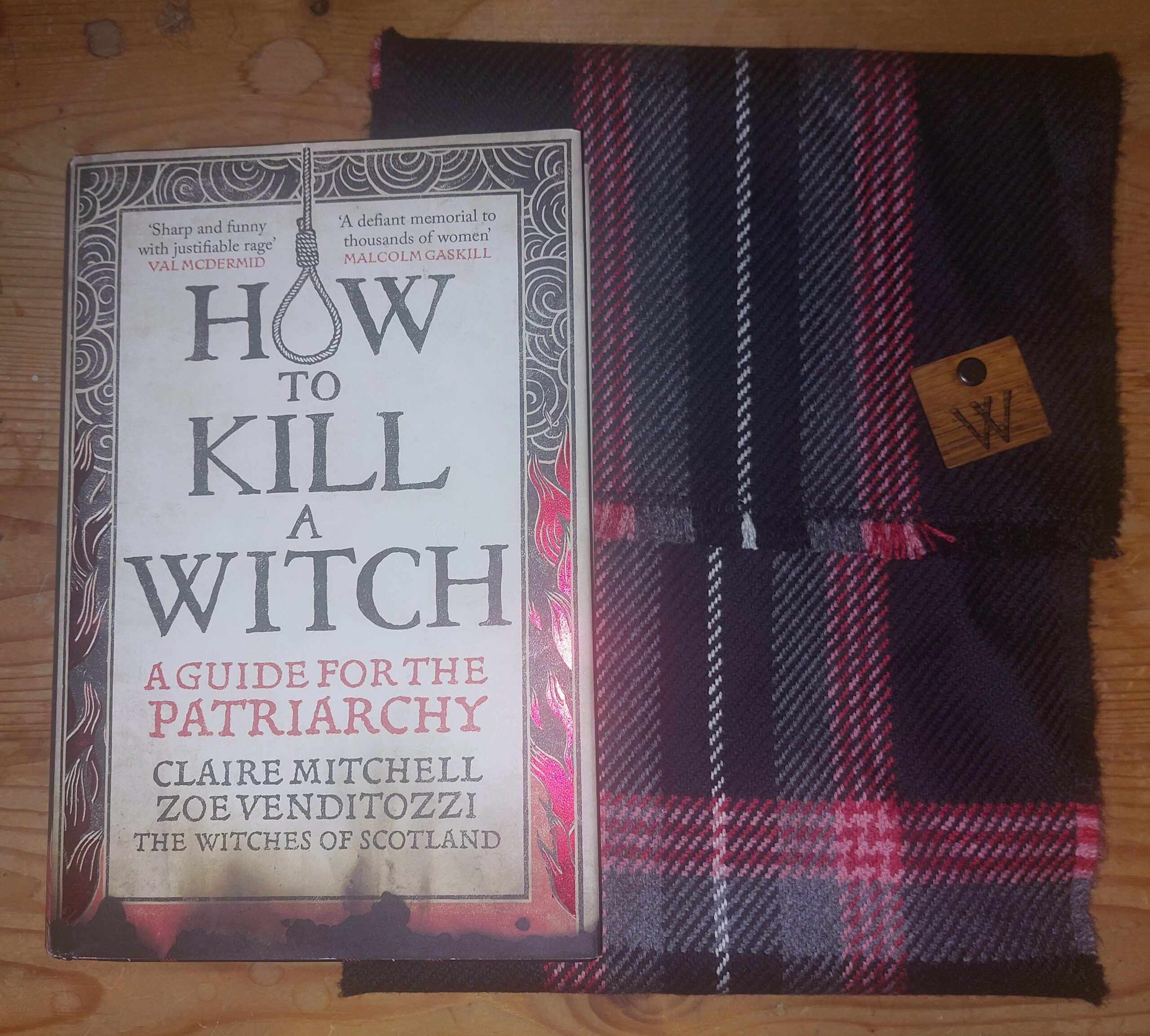
From poppy accessories for Remembrance Day to red lipstick as a symbol of power, resistance, and feminism, fashion has long been used as a conduit for political statements. The Witches of Scotland have created the newest addition to this wardrobe of statements with their own tartan to memorialise the victims of the Witchcraft Act. Crafted in collaboration with Clare Campbell of Prickly Thistle, who is reviving traditional tartan production in the Scottish Highlands, the design memorialises those who suffered as a result of the Witchcraft Act 1563–1736 in Scotland, which led to at least 6,000 being put on trial. The tartan is being transformed into wearable pieces of a ‘living memorial’, including kilts, scarves, and other garments, all available on their website, so that we can weave the memory of those who suffered into the fabric of our lives.
The tartan, a symbol of struggle, resistance, and community, is a fitting choice for the Witches of Scotland’s cause. The design, featuring black and grey hues, symbolises the dark times of the witch hunts and the ashes of those who were burnt. The addition of red and pink represents the bindings of the legal documents, which are still in use today. The intricate design even extends to the thread count of the black and grey, with the years 1563 and 1736 represented as single entries. The black and grey threads, woven around a white check of three threads, embody the organisation’s core missions: to secure a pardon, an apology, and memorials for the victims. The 173 years of persecution under the Witchcraft Act are also highlighted, with the large black section consisting of 173 threads.
While the primary focus is on Scottish history, the Quarrelsome Dames also shed light on the global history of witch hunts in their book. From the notorious Salem witch trials to the fact that at least 20,000 individuals (a number thought to be significantly higher) have been killed due to witchcraft accusations between 2009 and 2019, the Witches of Scotland address a chilling reality of systemic persecution.
The recent public lynching of a family in India, the sentencing of hundreds of women to witch camps in Northern Ghana, and the state-sanctioned witch hunts during President Jammeh’s 22-year dictatorship – which left deep scars in communities despite ending in 2016 – all highlight the urgent need for awareness about modern-day witch hunts. In fact, in 2023, the Human Rights Council highlighted the alarming number of witchcraft accusations each year, leading vulnerable groups – including women, children, the elderly and people with disabilities – to be targeted as victims of horrific human rights violations, including murder, rape, mutilation, and human trafficking.
Tartan has been a symbol of rebellion in the Scottish community since the English attempted to ban Highland Dress during the 1700s, as part of its attempt to dismantle Scottish culture and history. Now it is once again being drafted as a symbol of resistance, rebellion, and remembrance. This tartan is more than just cloth; by wearing it, you can honour the memory of those unjustly executed and subsequently wiped from our history books, whilst sparking conversations that raise awareness for those who continue to suffer. They are garments to be worn by Quarrelsome Dames.