

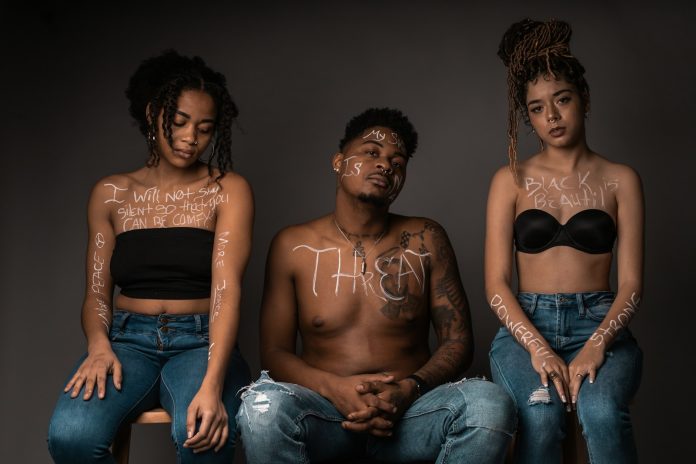
As Black History Month rolls around, we’re often encouraged to reflect on the legacy of Black achievement. Don’t get me wrong—it’s important to honour the resistance, the innovation, the victories in the face of unimaginable oppression. But there’s something else that needs to be addressed—something that lurks in the shadows of our history but remains ever-present in our lives today: the generational trauma of colonialism and how, in many ways, we’ve internalised the very systems that oppressed us.
It’s easy to look at history from a distance and think about what happened as an event in the past. But let’s be honest, colonialism isn’t just some distant event. Its effects didn’t simply die with the last European ship that sailed away. The mechanisms of control – economic exploitation, cultural erasure, the dehumanisation of Black bodies—are still with us. Worse, we carry them inside us, passed down through generations like a twisted family heirloom.
For so long, survival was our main concern. And can you blame our ancestors? They were trapped in systems that sought to strip them of everything—land, language, identity. When your entire existence is reduced to making it through the day, mental health, self-care, and emotional well-being aren’t exactly high priorities. You just survive. But here’s the thing: what happens when that survival instinct and mentality becomes so ingrained that it shapes how we live now?
Many of us—especially those of us who grew up in immigrant or first-generation families—are still living with this survival mindset. We learn early on that struggle is a virtue, that self-sacrifice is expected, and that talking about things like mental health is a luxury. But here’s the uncomfortable truth: these survival and coping mechanisms, while once essential, now keep us trapped in cycles of stress, overwork, and self-neglect. It’s like we’re trying to outrun our trauma with the very strategies that trauma created.
Take a look at how these patterns play out today. Studies show that Black people, especially those from immigrant families, are less likely to seek mental health support. A report by Race Equality Foundation states that Black adults in the UK are less likely to access mental health services voluntarily compared to white adults. They are also more likely to be detained under the Mental Health Act and be given medication rather than talking therapies. The NHS Digital’s Mental Health Act statistics also show that Black people are four times more likely to be sectioned under the Mental Health Act than white people.
The Mental Health Foundation, also highlighted that Black people tend to receive mental health support at a more critical stage, often through emergency or crisis services, which reflects systemic inequalities. This is worsened because we’ve been taught, consciously or not, that our mental well-being isn’t as important as our survival. It’s this notion that if our ancestors could survive slavery and colonialism, we can handle a little anxiety or depression. But is that really living?
Now, I’m not here to be a preacher, but we need to think critically about this: at what point does surviving become a prison in itself? At what point do we acknowledge that the coping mechanisms passed down to us—grinding through burnout, ignoring emotional pain, constantly hustling—are relics of colonial trauma? The systems that once oppressed us no longer have to do the work because, in many ways, we’re doing it for them. Satirical, isn’t it? They trained us so well we don’t even notice we’re stuck in their game.
It’s time to break out of this state of perpetual survival. We have the power, the agency, and—believe it or not—the right to do more than just survive. This is where radical self-love comes in, and not in some fluffy, “love yourself” Instagrammable way. I mean a full-scale rejection of the limiting beliefs that colonialism embedded in us: that our value is tied to our productivity, that we must endure suffering to be worthy, that joy and rest are luxuries we can’t afford.
And let’s be clear—rejecting these beliefs is an act of rebellion. Think about it. After centuries of being told we’re lesser, less human, less capable, choosing to love and care for ourselves unapologetically is an act of defiance. It’s flipping the script. It’s reclaiming what colonialism tried to steal: our humanity. When we prioritise our mental, physical, and spiritual health, we’re telling the world—and ourselves—that we deserve to exist in fullness, not just in fragments.
This isn’t about pretending the trauma didn’t happen. The scars are there, no question. But we don’t have to keep reopening the wounds by clinging to the survival strategies that no longer serve us. Instead, we can begin the work of healing—true healing, that goes beyond just coping, beyond just getting by.
I know what some of you are thinking: Easier said than done. Of course it is. Undoing centuries of conditioning isn’t a walk in the park. But we can start small. We can start by questioning the narratives we’ve internalised. We can recognise when we’re living out patterns that aren’t serving us, when we’re stuck in the grind because we think that’s all we deserve. And most importantly, we can allow ourselves to rest, to breathe, to live—not just survive.
If there’s one thing Black History Month should remind us of, it’s that we’ve always been more than what the world says we are. Our ancestors were more than slaves, more than colonised subjects, and we are more than the trauma that’s been handed down to us. The greatest rebellion is not just surviving—it’s thriving. So let’s honour that legacy, not by repeating the past, but by breaking free from it. Because we deserve more than survival—we deserve to live.
