

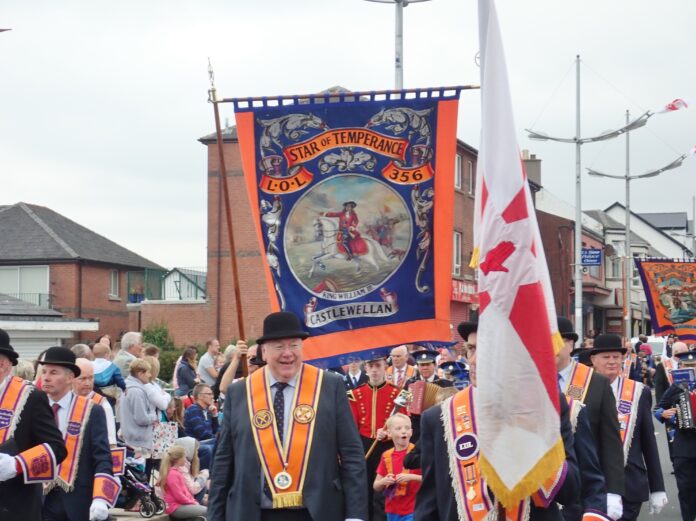
Northern Ireland has faced tensions over the weekend reminding many of the continuing fragility between loyalist and nationalist communities. The Orange Order, a unionist flute band, led marches across Ireland and Scotland in commemoration of William of Orange’s defeat of King James II in 1690.
The Orange Order has specific routes that they are allowed to walk, including to and from the Church of Dumcree. Since the height of the Troubles in the 1980s, the route has been changed, banning the Orange Order from marching through predominantly Catholic areas due to the violence it caused.
The first rerouting happened in 1986. In the years leading up to the banning of the march through Obins Street there had been several nights of protesting and violence. Residents of Obins Street organised a sit down protest before the Orange Order was due to march, the protesters were cleared by police officers resulting in some injuries. This was the second year of tension and resulted in the order being banned from marching down Obins Street.
It was rerouted again in 1998 to prevent the Orange Order from marching down Gravaghy Road. According to the Ulster University Archive between 4-14 July there were 2,500 public order incidents relating to the march. More than 140 houses were damaged across Northern Ireland in those 10 days. This violence drew international attention and concern over the sectarian conflict in Northern Ireland.
In the same year 3 brothers: Richard Quinn, eleven, and his brothers Mark, nine, and Jason, eight were killed in an arson attack on their house. Their mother had expressed previous concerns along with some of her neighbours that they were becoming increasingly unwelcome in their communities on the run up to the march. One man was charged with their deaths, Garfield Gilmour, who had driven three unidentified Ulster Volunteer Force (UVF) members to the house. The Orange Order’s County Armagh chaplain, the Reverend William Bingham, called for the protest at Drumcree to come to an end, saying: “No road is worth a life, let alone the lives of three little boys.” This incident and the international condemnation that came from it led to the banning of the march through Gravaghy Road.
The Orange Order has appealed the banning since and for 28 years have been denied access to march down the road. This year however, the banning of this route was overturned by the high courts in Northern Ireland and the Orange Order was given access to the road two days before the march was set to begin. Despite an injunction being issued, the march was allowed to take place. This sparked protests by residents of Gravaghy Road and across Northern Ireland. Residents of Gravaghy Road have been performing sit downs and locking arms to prevent members of the Orange Order from marching. There have been some attempts by Orangemen to march but they have been blocked by police.
In a video online, Scottish Greens MSP Maggie Chapman criticised the deployment of Scottish police officers to “facilitate and support sectarian marches”. This was referring to the two hundred officers that had been sent to police the Orange Order marches on Gravaghy Road.
Party leader of Sinn Fein Mary Lou McDonald and NI First Minister Michelle O’Neil have joined the protesters on Gravaghy Road. Speaking in the Northern Ireland Assembly on Monday, Ms Neill said she was proud to protest with the residents who “have suffered generations of sectarian domination, intimidation and violence”. DUP leader Gavin Robinson responded to O’Neill and McDonald’s presence at the protest by saying that they were “breaching their pledge of office, participating in an unlawful protest and blocking”.
Edited by Ross Munro
