

Student organisations in Britain are holding referendums to leave the National Union of Students (NUS) over its dissent on pro-Palestine activism.
Student unions at Cambridge and LSE have opted to exit NUS, with referendums on disaffiliation due to be held soon in Manchester, SOAS, Birmingham, Cardiff and Liverpool.
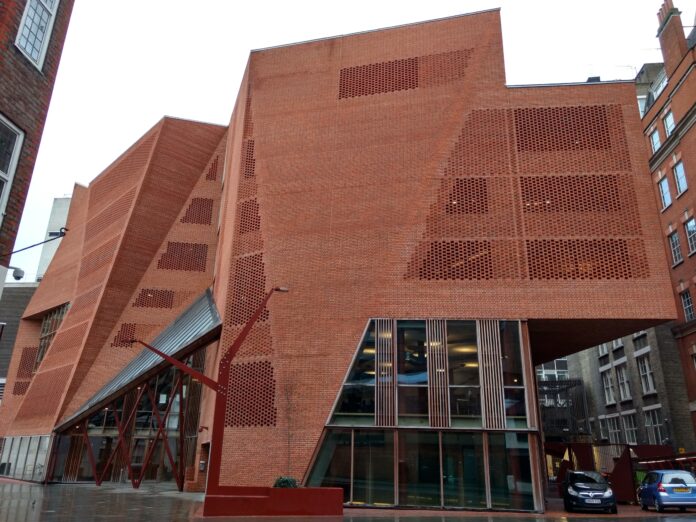
Last Thursday, 62% of voters in a referendum at the Students’ Union (SU) at London School of Economics (LSE) opted to leave the NUS.
Students at LSE SU campaigned under the slogan ‘end NUS’, accusing the body of “longstanding silence on Palestine” and “weak democratic processes”.
Among them was Isabel Howe, Liberation Officer at LSE SU, who felt her union had not benefitted from membership in recent years.
The sabbatical officer said she “couldn’t recall voting on a single NUS UK policy or priority” since becoming an officer in July 2025, causing her to lose confidence because she couldn’t see a route to resolution.
Despite NUS staff descending to the London campus to sway voters to remain, students chose to disaffiliate – a result which Isabel Howe called “satisfying”.
Now, the LSE is joining Cambridge in walking away from the NUS.

In October, students at University of Cambridge voted to leave in a referendum seen as historic. Campaigners had labelled the NUS as Islamophobic and Zionist. With 47% of students voting to disaffiliate and 19% abstaining, Cambridge SU will have left by the end of this year.
At Cardiff SU, students voted not to confirm affiliation to the NUS at their annual meeting in November, which prompted a referendum on NUS membership scheduled for March.
At Liverpool University, a petition alleging that NUS is “financially motivated and undemocratic” amassed over 1,000 signatures, forcing a student-wide referendum scheduled for next week.
“NUS is repressing its own members for speaking out on Palestine,” writes Finlay Deane, the petition’s author. He notes that the body historically led consumer boycotts against the apartheid regime in South Africa.
“Enough is enough. It’s time to reinvest the affiliation fee into our own societies,” Finlay adds.
Founded in 1922, the NUS aims to represent student interests at a national level. The wave of disaffiliations across Britain follow recent allegations of Islamophobia, antisemitism, and suppression of activism.
Leaders of the NUS sparked the latest controversy when they emailed threats to officers who had signed an open letter.
A leaked memo showed that leaders of the NUS – including its President Amira Campbell – had instructed officers to withdraw their signatures from an open letter or risk being barred from a national conference.
The open letter had called on the organisation to take several actions in relation to Israel’s war on Gaza, but NUS said the letter constituted antisemitism and harassment – which the letter’s authors deny.
The Gaudie understands that several students who refused to comply with NUS demands proceeded to be barred from attending the Lead and Change conference in Birmingham.
This prompted local activists to occupy the Birmingham Guild of Students, preventing the conference from proceeding as planned in July 2025.
Responding to mounting pressure, NUS have released a statement in support of Palestine, and campaigned for Gazan students to be evacuated to the UK.
Further, the Palestinian ambassador was invited to speak at a NUS England conference in November.
However, this did not seem to appease delegates frustrated with the NUS. Videos posted on social media appear to show a walk-out, loud music played over a delegate asking a question, and NUS officials being left speechless when challenged to acknowledge the perpetrator of genocide in Gaza.
The Federation of Student Islamic Societies has backed the campaign to abandon the NUS.
The latest dispute plays out against the backdrop of a 2023 investigation which found that NUS had failed to tackle antisemitism within its ranks. At the time, the British government suspended ties with the body and University of York SU opted to disaffiliate.
Amira Campbell defended NUS UK – which she leads – and commented on disaffiliations:
“NUS UK represents over 4.5 million students from over 400 Universities and Colleges who all benefit from our collective work and action. We know that the student voice is stronger and louder together, so we are disappointed that LSE SU and Cambridge SU have chosen to leave.
“From graduate route visas, renters’ rights and student loans; we will keep delivering for students on the issues that matter to them. And this has included working with the Palestinian Ambassador and Universities Minister to get students from Gaza to UK universities.”
Amira Campbell concluded: “We are always keen to hear from students and sabbatical officers and want to ensure that their National Union is working for them.”
It is not clear that any Scottish students’ unions are moving to disaffiliate from NUS.
Aberdeen University SU (known as AUSA) continues to be an NUS member. Its former Vice President for Welfare, Sai Shraddha Viswanathan, sits on the NUS UK Board as NUS Scotland President.
At AUSA’s annual general meeting in February 2025, the union reported that it pays £19,208 to NUS UK and £4,802 to NUS Charity annually. At the meeting, students voted to remain affiliated.
This article has been updated since it was published in the latest print edition of The Gaudie.
