

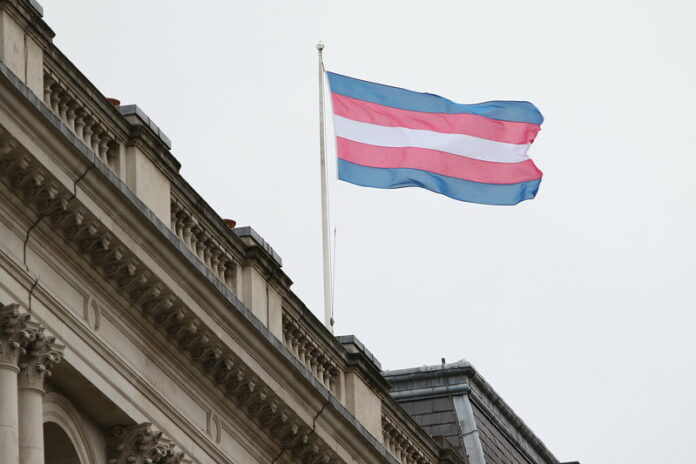
After seven years of legal battles, the United Kingdom Supreme Court (UKSC) has ruled that the term ‘woman’ should be taken to mean biological sex only. Five judges ruled unanimously on the decision. This marks the end of a tussle between For Women Scotland (a trans-exclusionary feminist group) and the Scottish Government, who previously took a trans-inclusive approach to policy making. The case came about due to statutory guidance issued by the Scottish Government stating that at least 50% of people appointed to Scottish public authority boards must be women.
This guidance sparked a much wider debate about the legal definition of a woman. Prior to the judgement, ‘woman’ included persons in possession of a full gender recognition certificate. The UKSC judgement nullifies this concept, defining ‘woman’ to be solely based on biological sex, or the sex a person is assigned at birth. Although the judgement states that this does not remove protections from trans people, it is unclear how this will work in practice.
The UKSC say that trans people will continue to be protected from discrimination on the grounds of gender reassignment, and can also continue to invoke discrimination and harassment provisions from the Equality Act 2010 on the basis of sex (with the reason being that trans women are perceived to be women). In such cases, a gender recognition certificate would not be required, seemingly contradicting earlier reasoning that sex interpretation would weaken protections for other minority groups. Sacha Deshmukh, the chief executive of the human rights group Amnesty International UK said:
“There are potentially concerning consequences for trans people, but it is important to stress that the court has been clear that trans people are protected under the Equality Act against discrimination and harassment,”
An example attached to the reasoning for removing the concept of “sex interpretation” was that it could harm minority groups, such as those with the protected characteristic of sexual orientation. According to the UKSC, allowing for ‘woman’ to include trans women could create issues in lesbian-only spaces and associations. However, it was not explained how these spaces would certify that the people entering them are cisgender.
Throughout the 88 page judgement, there is no mention of intersex people. According to the NHS, intersex people have a medical condition causing them to be born with a variation in sex characteristics. Most intersex people have a clear sex registered at birth, but others see being intersex as distinct from the ‘traditional’ sexes of male and female. Questions have arisen regarding how intersex people will fit in this new definition of ‘woman’.
Apart from concerns over access to single-sex spaces for trans people – particularly trans women – going forward, another issue is the lack of a route for appeal. The UKSC is the highest court of appeal in the UK, and applications to the European Court of Human Rights (although possible) are extremely rare, and must be made by an individual rather than an organisation. This is also after all other routes have been exhausted in their home country. In other words, overturning the judgement is unlikely.
The judgement has been incredibly upsetting for the transgender community, and has potentially devastating ramifications for trans rights. But in the words of Esme, a member of the Trans Rights forum at the University of Aberdeen:
“It’s important to remember, however, that this isn’t the end. We are not defeated, and we won’t ever be defeated.”
Support is available, you are not alone:
Four Pillars Aberdeen
Drop-in service, Tuesday – Saturday from 10am – 5pm
Switchboard LGBTQIA+ Support Line
0800 011 9100
Gendered Intelligence Support Line
0800 640 8046
