

Wildlife reintroductions are a risky business, as many things can go wrong. No matter how carefully a project is planned out, there is always uncertainty about how the released individuals will fare in the wilderness. One of the best indications of success is reproduction, which shows that the animals are doing well and have adapted to their new environment. Two Scottish reintroduction projects celebrated their first wild offspring this summer, reinforcing beliefs in their methods’ success.
Saving Wildcats is a European partnership project dedicated to restoring the once widespread wildcat population to Scotland. In a 2018 study, the native species was determined to be no longer naturally viable and a decision was made to start a captive-breeding programme. A team of experts is using a soft release approach with an acclimatisation period in enclosures that closely resemble natural habitats, which resulted in the release of nineteen wildcats in 2023. In May of this year, camera footage confirmed that at least two of the reintroduced females had given birth to wild-born kittens.
“We didn’t dare to dream that we would have wildcat kittens in the first year of releases, and seeing those kittens on the video was the most exciting moment of the project so far.”
said Dr Keri Langridge, Saving Wildcats Field Manager. With movement data collected from GPS collars, the team was able to determine that the new mothers had crossed paths with male wildcats on several occasions. When the kittens are old enough, DNA sampling will be attempted to confirm that no hybridisation with feral cats occurred. Hybridisation is one of the biggest threats to the population, which is why Saving Wildcats also carries out Trap-Neuter-Vaccinate-Return of feral cats and works with communities to educate cat owners.
Sixteen more kittens have been born through the breeding programme, and nine cats of the 2023 cohort have been released in the summer despite challenges with bad weather conditions. The team is now hoping for another successful breeding season in the wild over the winter.
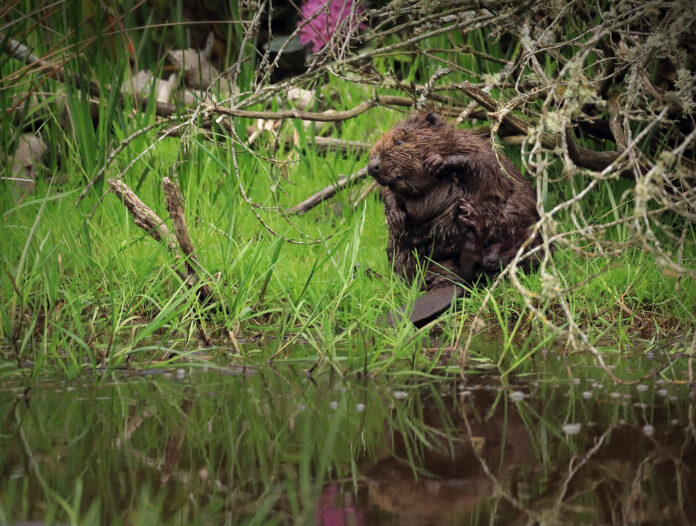
Another project, which aims to reintroduce beavers to the Cairngorms National Park, is also in its second year of releases. The programme is organised by NatureScot, which manages the Cairngorms National Park Authority, several estates of the Upper Spey Catchment, and the Beaver Trust. Last winter, six families from the Tay catchment were successfully relocated into the National Park, bringing the Eurasian beaver back to the area for the first time in 400 years. This August, Rothiemurchus Estate and Wildland Cairngorms Ltd. each reported a kit born on their land.
“This is a really exciting milestone in our project to bring beavers back to the Cairngorms National Park. We’ve been monitoring the beavers closely since the first releases in December and it’s encouraging that two of the beaver pairs have already bred successfully.”
said Sarah Henshall, Head of Conservation at the Cairngorms National Park Authority.
Beavers were hunted to extinction across the UK. Reintroduction programmes across Scotland have been in progress since 2008. The herbivorous animals are considered a keystone species, as they shape habitats, restore wetlands, improve aquatic habitats and biodiversity, and help mitigate climate change.
The success of both of these reintroduction projects in the Scottish Highlands shows how rewilding concepts are improving and are a victory for conservation efforts. They give hope and inspiration for the future of these species in their native habitats and Scottish wildlife as a whole.
