


CW: Mild suicide references
By Kirsten Koss and Amelia Boag McGlynn
October marks ADHD awareness month. If you know an ADHDer, then chances are, every month feels like ADHD awareness month! Hyper-fixation is a part of ADHD so we love to talk about it.
Those with ADHD often talk about their condition to seek understanding, process their experiences, and connect with others. When you constantly feel like something is wrong, the natural response is to try and verbalise it in front of others as much as possible.
But what is ADHD? NHS Inform describes Attention Deficit Hyperactivity Disorder as “a group of behavioural symptoms” with difficulties in concentration, hyperactivity and impulsivity. This ADHD awareness month, it is time we realised that word choice matters. “Behaviour” suggests this is a choice. We hope you can tell from our experiences that this is certainly not a choice.
Sadly, ADHD is missed in many girls because of societal expectations of girls. The type of behaviours that are drilled into young girls are the behaviours that fuel the practice of masking – defined as “the act of suppressing or concealing neurodivergent traits in order to appear neurotypical”. Studies generally conclude that girls are three times less likely to be diagnosed – and those girls turn into women just like us.
Kirsten, diagnosed age 24
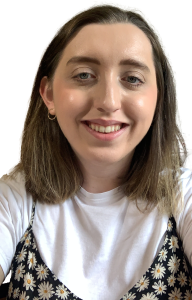
My entire life, I have felt inadequate – like I was somehow not able to function like everyone else. This is something I had accepted as a personal failure. A 2005 study concluded that children with ADHD are four times more likely to be rejected by their peers than neurotypical kids…that’s just from other kids. Let’s not even talk about all the teachers who shouted at me for forgetting my workbook, or losing the flute I was given in primary school when I actually wanted to learn the saxophone. I even remember one teacher telling me “My parents must be ashamed of me,” because I found building a bridge out of pieces of spaghetti a pointless and mind-numbing task.
Because I was a girl, it was never an option that my poor organisational skills might be something I couldn’t control, or when I said I had tried not to be late, I might be telling the truth.
Eventually, I just stopped going to school, crippled by the shame of being unable to begin to study and carrying a deep sense of shame that I wasn’t able to organise myself without the pressure of a deadline. Many teachers expressed disappointment at me “wasting my huge potential”. I wish they could have felt the shame that I felt – I knew I had potential too, I just wasn’t able to use it. Perhaps if I had been an unruly boy, things might have been different.
In 2023, my “I am not inadequate” journey started because I was diagnosed (thanks, UoA!) with ADHD. I couldn’t quite believe it. I don’t have a deficit of attention, and you certainly wouldn’t describe me as hyperactive! In fact, when my ADHD symptoms are at their worst, you will find me on the sofa, scrolling through something I’m not remotely interested in, whilst internally worrying about a long list of incomplete tasks, unable to do anything else.
That’s the thing. For a lot of women with ADHD, our hyperactivity is internalised. Besides, even I, someone with ADHD, thought people with ADHD were 7, male and badly behaved. Like so many others – I needed enlightening.
Getting an adult diagnosis of ADHD has been likened to going through the six stages of grief and even after a year and a half, I’m still not quite at acceptance yet. Experiencing an adult diagnosis of ADHD is grief. It is really hard to realise that life could have been easier. My ADHD has cost me so much – friendships, some of my most treasured relationships, my schooling, my teenage years, very nearly some jobs and my degree, so much enjoyment, and even, as a teenager, my life. That is quite something to come to terms with and I am definitely not there yet, but therapy is helping. I’ve learned that there is nothing wrong with me – some things are just harder for me – and that’s ok.
Realising I am not inadequate has changed my life and this ADHD awareness month, I hope that people choose to learn more about ADHD and try to understand people like me and Amelia because we have so, so much to give – just don’t ask us to be on time.
Amelia, diagnosed age 16
My ADHD diagnosis came at a natural pace. As a teenager, I was diagnosed with
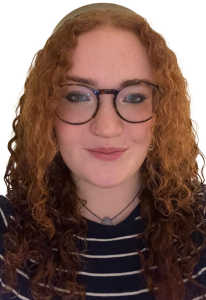
a host of neurological conditions, one after the other. Although it may seem like a bizarre concept, ADHD seemed to fit as a notch in my belt of neurodivergence.
I was under 18, so my teachers had to be consulted on the decision to diagnose me. They were perplexed –
I wasn’t the image of ADHD that so many of them had encountered before. I was studious, straight A’s, part of the senior leadership team, and kept perfect reports. In fact, I summed up everything they thought ADHD was not.
My ADHD had driven me to create too perfect of an image – so well constructed it blocked my first attempt at getting formally diagnosed.
The issue lay in my presentation. The authority figures in my life knew me as organised, collected, and responsible – it was the journey to get me to these perceived attributes that were chaotic. Teachers couldn’t know that every assignment was completed hours before it was due, that I held my tongue from the first to last bell, and that every day before and after school, I would weep over the perpetually jumbled state of my life.
Since then, I’ve grown up, moved away, and started university. I’ve had to wonder – if only I’d acted differently, perhaps my ADHD journey wouldn’t have been so difficult. If I’d let people see the real me that disappeared each morning as I stepped through the school gates, I could have found coping mechanisms to make my life easier years before I initially did. I wish I’d come into school screaming, crying, yelling at the top of my lungs. Maybe someone would have noticed then.
However, the issue boils down to one point – I should not have needed to do that.
Education about neurodivergence is key to the future of young girls, preventing them from suffering the same fate Kirsten and I experienced. I grieve the loss of the regulated teenage experience I could have had. I carry the weight of the little girl I once was with
me. I owe it to her to make space for women with ADHD and other neurodivergences in the world and devote myself to the education and inclusion of these conditions.
Useful resources:
- UoA students who suspect they may have ADHD can access the University of Aberdeen’s disability service by emailing student.support@abdn.ac.uk.
- University of Aberdeen Neurodiversity Network (Staff and Students)
- The ADHD AF Podcast – Laura Mears-Reynolds (originally recorded in Aberdeen!)
- UK women ADHD Facebook Group
Books:
- Unmasked – Ellie Middleton
- The ADHD Advantage – Anders Hansen
- It’s Not A Bloody Trend – Kat Brown
- Dirty Laundry – Richard Pink and Roxanne Emery
