

Sustainability has become a real buzzword: wherever you go there are eco-friendly labels, recyclable packaging, and I think we’re all guilty of going to Freshers’ for the free totes. However, sustainability is not without its challenges. Green products tend to be wildly expensive, with little explanation for this other than ethical values and eco-friendly production. There is also the bizarre trend of people ending up with multiples of products due to older non-sustainable iterations being demonised, or newer versions being more fashionable. With these problems in mind, can we truly say that the sustainability movement is what it claims, or just another profit-driven scheme?
Environmental awareness emerged 5000 years ago across old religions such as the Vedic system and Buddhism, as well as Greek Mythology with the legend of Gaia and Orion. The first act of ‘modern’ sustainability was in 1306 when King Edward I limited the burning of coal due to London’s heavy smog. Sustainable development was first defined in 1987 in the United Nations’ Our Common Future Report as “meeting the needs of the present without compromising… future generations”. It was around this time that global warming was acknowledged, and environmentalism and sustainability became business selling points. But are these values really central to corporations?
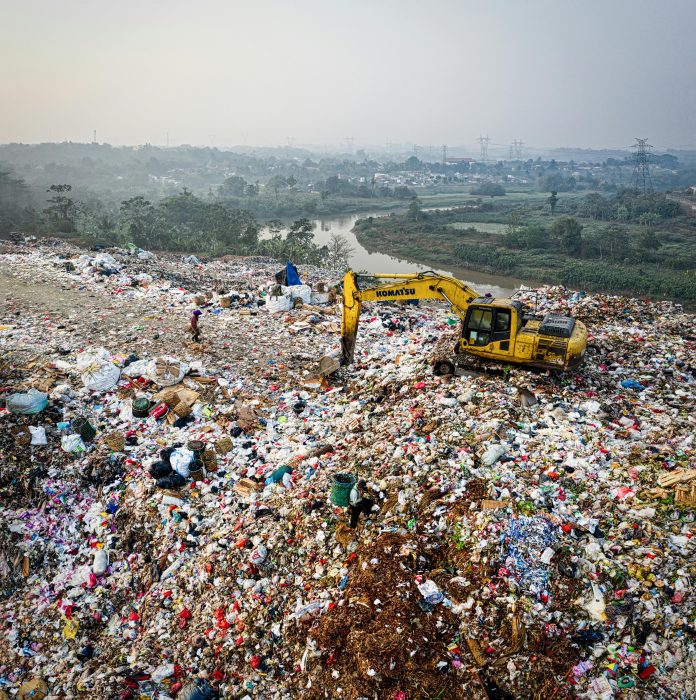
Over nine billion tonnes of plastic have been produced worldwide since the 1950s, more than half of which was created post-2000. In 2019 alone, over 460 million tonnes of plastic was manufactured, which the Organisation for Economic Co-operation and Development reports is double the amount from 2000. Unfortunately, this number will only continue to multiply. Rather than decomposing, plastic breaks up into microplastics which damage wildlife and ourselves; with eight million tonnes of microplastics getting into water every year. The long term effects on humans are still not known. Horrifying, right?
The plastic industry is responsible for four times more greenhouse gas emissions than the airline industry. You would think that big diesel birds would be more harmful than water bottles and shopping bags, however when 19% of this plastic is being burnt and the remainder mostly ends up in landfill, it begins to add up. Considering these statistics, reusable alternatives are very attractive, but have their own set of problems. Platforms like TikTok are encouraging the highly unsustainable practice of buying items simply to be on trend. That’s right – we need to talk about Stanley.
In case you missed it, I’m not talking about the box cutter company. Stanley cups are the $45 drinkware that have been causing a stir across the internet. Marketed as being a sustainable lifetime purchase, the current online craze has led to Stanleys becoming a fashion accessory, something which is reflected in their sales. Between 2022 and 2023, Statista reports an increase of $348 million in Stanley’s revenue. Though Stanley have taken some steps to reduce their environmental impact like phasing out plastic packaging and making charitable contributions, when they themselves state that it’s only 1% or so of their net income going towards these efforts, it raises the question of whether these multi-million dollar companies are truly environmentally conscious, or merely profit-driven in their motives.
Another major plastic essential is period products. According to City to Sea, around 300 billion pads and tampons are used each year, 200,000 of which end up in landfill in the UK alone. Again, reusable alternatives sound promising until you see the price tag; on average, HeyGirls charge £40 for five reusable pads and wet bag, and £20.30 for a menstrual cup and sterilising pot. Wuka have similar prices, charging £11.99-£20.99 per pair of period underwear. These costs are justified (among other things) by outreach work: HeyGirls operate a “buy one donate one” system, meaning for every product purchased, they donate another. As of 2022, 300 million donations have been made across the UK. Wuka donate period underwear to schools, and both companies provide UK-wide menstruation education; these are all efforts that are desperately needed not only to reduce plastic waste but to eradicate period poverty.
But is it possible to maintain the ethical and sustainable values these companies promise whilst reducing their prices to make reusable period products affordable for all? When one pack of 20 Tampax costs £1.90 and one pack of 14 LilLets costs £1.50, the choice is non-existent for many. Even with the so-called Tampon Tax being abolished in the UK in 2021, many people still lack choice during their periods due to sustainable products not being remotely affordable. (If anybody would like to try out reusable period products, there are supplies in the Student Union building and Foresterhill campus – please just ask!)
This is not just an issue of choice, and absolutely not confined to the UK – in a research paper conducted by Babbar and Garikipati, it was found that in India only 39% of households reported spending on period products in January 2020, a number that further dropped by 16% during the pandemic. This paper highlighted the need for greater government commitment to ensure availability of a range of affordable and accessible period products; in my opinion, this should include reusables.
Of course, some plastics cannot simply be swapped out. According to NHS England, 156,000 tonnes of clinical waste are produced every year, a number that the Journal of Public Health Research states increased by 500 tonnes during the peak of the Covid pandemic. Clinical waste is defined by the Controlled Waste Regulations 1992 as any waste produced from healthcare which may pose an infection risk or be otherwise hazardous. This astounding figure is not without reason: the MHRA highlights serious risk of cross-infection when certain devices are reused. Though NHS trusts are moving towards reduction of waste via reduced reliance on disposables such as safe reuse of sharps bins, this is a long process which has to be conducted safely; it cannot happen overnight. The sustainability movement looks different for everyone, and while the ideal would be to simply replace disposables with reusables, the medical industry demonstrates that this is not always immediately possible.
The sustainability movement has many merits: more conscious consumers, better values, increased ethics, and most importantly, improved environmental awareness. I do think it has the potential to make a dent in climate concerns in the long term. However, improvements are vital; sustainability looks different for everyone, and it is not always as simple as adhering to the ‘ideal’ lifestyle of zero-waste and plastic free. Corporate responsibility needs to increase – we are in a situation where people are struggling to afford single use products, never mind sustainable alternatives. We need to bridge the gap to make sustainables the same or even cheaper than their single use counterparts whilst still maintaining ethical values.
So the next time you see that new ‘sustainable item’, ask yourself: is the one I already have still functional? If it is, one of the best choices you can make is to keep using it for the time being, even if it is made of plastic or another unsustainable material. By all means treat yourself or replace things that no longer work for you but don’t end up with a collection of twenty Stanleys – nobody needs that many!
