

CW: death, uncomfortable conversations about graphic imagery in circulation online
I don’t know about you, but the press makes me really angry. That might sound strange; I am a student journalist and you are reading my article in a student newspaper, but I have a problem with journalists and I want to talk about it.
I am sure you are aware, Liam Payne, formerly of the boyband One Direction, passed away in Argentina in October this year in a truly tragic accident in Buenos Aires. I’m not here to write about his death – he has been laid to rest and it is time for his family to grieve. But that’s the thing. I don’t care about fame – everyone deserves to grieve the loss of a loved one in peace, and from the minute Liam Payne passed, his family and friends have not been afforded basic privacy.
…everyone deserves to grieve the loss of a loved one in peace.
Less than an hour after his death, Fox-owned tabloid TMZ had ‘broken the news.’ Not only had they shared the story of Payne’s tragic death, but they had included a photograph of his body sprawled on the floor of the hotel’s decking. I don’t know what the worst part is: the fact that they deemed it acceptable to share the body of any person after their death, that they thought cropping it would make it any better, or that the editor of TMZ allowed that picture and story to be published before Liam Payne’s family were even aware. I sincerely hope that Liam Payne’s family were able to avoid seeing something so harrowing, and yet I doubt they were, with Payne’s sister posting a tribute to her little brother, sharing that she became aware of his death when “I saw the news pop up on my phone.”
What kind of world do we live in when an innocent woman finds out her baby brother has passed away on the news? I don’t care how big of a Liam fan you were, the first people to learn about this tragedy should have been his family.
In the weeks following his death, the media were obsessed. As medics began to investigate the cause of death, rumours circulated online, fuelled by tabloids, with journalists desperate for the next ‘big headline.’ Before toxicology results were confirmed, articles were published accusing Payne of consuming a ‘cocktail of drugs,’ with photos of his hotel room also circulated online. In the end, it turned out Payne had not consumed the alleged cocktail – but I don’t think it’s any journalist’s place to tell you what he did in his private life, and so I will afford him the decency he deserved.
As the date of his funeral loomed, I personally felt a sense of dread for Liam Payne’s family and friends, particularly his parents and his seven-year-old son Bear. After the press followed Payne’s dad Geoff in Buenos Aires, filming a grieving man as he went to Argentina to take his son back to the UK, I knew they would stop at nothing to get a shot of his funeral, and I wasn’t wrong.
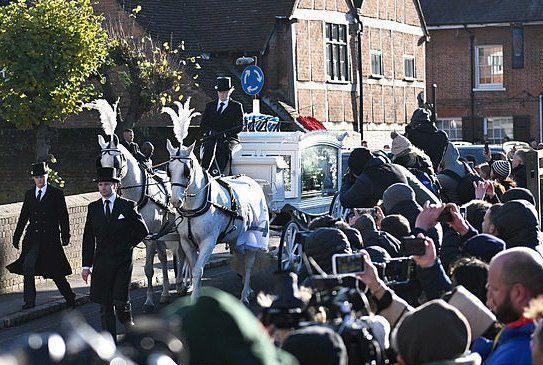
I knew they would stop at nothing to get a shot of his funeral, and I wasn’t wrong…
Last Wednesday, in Amersham, Buckinghamshire, Liam Payne was finally laid to rest. I had hoped that Liam could be laid to rest, with his friends and family able to grieve in peace. Instead, dozens of media outlets gathered outside the church, desperate to catch a glimpse of his family and One Direction bandmates in mourning. Reportedly, the Payne family had to strike up a deal with the press: that they could film the stars entering the funeral, as long as Liam’s young son was allowed to attend the funeral in peace.
It is sickening to think a grieving child would be photographed. Worse yet, many of the headlines following the funeral were about the One Direction boys ‘reuniting’ at the funeral and accusing Liam’s girlfriend Kate Cassidy of ‘not being sad enough.’ Even the BBC reported that Harry Styles was in attendance. Don’t get me wrong, I am a huge Harry Styles fan, but it’s none of my business if he, or any of the 1D boys went to the funeral, and it’s not yours either.
The coverage of Liam Payne’s death, and the lack of tact in the way that it has been covered is sadly nothing new. In an infamous front page, The Sun printed false information about the 1989 Hillsborough disaster, printing a series of accusations about Liverpool FC fans, on the day that 96 were tragically killed. The Sun used their power to absolve the police of responsibility. It wasn’t until 1990 that the Taylor Inquiry into the disaster found that no fans were at fault, and that instead, the police had been. To this day, many of the families of the 97 who died as a direct result of the disaster feel justice is yet to prevail.
Closer to home, when a Scotrail train derailed in Stonehaven in 2020, The Sun’s front page headline was ‘Death Express,’ and reportedly their journalists forced their way through fields to take photos of the wreckage where the driver, conductor, and one passenger sadly died.
It’s not just The Sun and TMZ, with tabloids like the Daily Mail publishing hundreds of hateful narratives attacking marginalised people, often invoking culture wars, including sexualising women, creating a platform othering Muslim women, and creating a moral panic over asylum seekers. People so desperate to seek a safe life, they traverse the sometimes-treacherous conditions of the English Channel in nothing more than a rubber dingy.
The point is, journalists wield a huge amount of power, and as the saying goes: ‘with great power comes great responsibility.’ It’s our job as journalists – and that includes student journalists – to be aware of the power of reporting at every stage. We must carefully consider the words used, the angles we take, our readers, and the impact our words have. I don’t think we should tar all journalists with the same brush, but Liam Payne’s death showed that toxicity exists in every branch of journalism.
To other student journalists: as journalists of the future, we must be the change. Rather than reporting with self-betterment in mind, we should focus on reporting the truth, as and when it is appropriate to do so. We shouldn’t sensationalise – we are reporters, not entertainers. Our job is to give a voice to the voiceless, and to inform. Before we hit publish, we must ask ourselves – who needs to know this and why? Journalism is a force for good, and we as journalists have helped shine light on many serious issues, but journalism has its problems, and it is time we acknowledged it.
News Associates will host a Media Ethics workshop for all aspiring journalists on Wednesday 4th December from 10:00-13:00. Sign up at: https://forms.gle/ofPxTbR1AcYWyJwQ7
